This post contains Amazon affiliate links. As an Amazon Associate, Plan0gram earns from qualifying purchases, at no extra cost to you.
Not medical advice: this article is general travel information from a frequent flyer, not medical advice. Talk to your doctor or pharmacist about what’s right for you, especially before using any medication or supplement.
Last Updated: October 5, 2026
Even Frequent Flyers Get Nervous
I used to be very specific about which airplanes I would fly on, and which ones (read: prop planes) I wouldn’t. But when a flight was cancelled or I was rerouted because of weather, I’d get a little anxious. And I used to really dread turbulence.
Flight anxiety often starts long before the gate. You’re packing at home, checking the weather at your departure airport, and your heart rate climbs. That doesn’t mean something is wrong. It means you need a plan, and none of what follows requires you to stop being nervous.
Here are the five things that actually help, plus what I keep in my own bag.
1. Know How Airplane Safety Actually Works
Vague fear shrinks when it meets specific facts. It helps to know why commercial flying is built to be safe:
- Redundancy by design. Critical systems on airliners (hydraulics, electrical, pressurization, flight controls) are duplicated or triplicated.
- Continuous tracking. From pushback to the gate, air traffic control keeps every flight separated from the others.
- Investigation-driven improvement. When something goes wrong, the fix is structural. The NTSB investigation process publishes findings and safety recommendations that feed into training, maintenance, and design. That loop is why the accident rate has kept falling over the decades.
- Maintenance discipline. Inspection intervals, parts tracking, and documented sign-offs are legally required, not optional.
Tip: If one fear keeps coming back (turbulence, takeoff, a strange engine noise), name it and look up how that exact situation is designed for. A specific question has an answer. A vague fear doesn’t.
2. Use a Breathing Exercise You Can Do in Your Seat
Slow breathing calms your body down, and nobody around you will notice. Two techniques cover almost every situation:
- Box breathing: breathe in for 4 counts, hold for 4, breathe out for 4, hold for 4. Repeat. It’s the easiest one to do quietly.
- 4-7-8 breathing: breathe in through your nose for 4 counts, hold for 7, breathe out slowly through your mouth for 8. It’s better if you want to settle down or sleep.
Practice both at home before your trip. Your body needs a few reps before it trusts the technique.
Tip: Don’t try a brand-new breathing technique for the first time in the middle of a panic moment. Untested tools can make anxiety worse because you’re adding pressure to get it right.
3. Try the 5-4-3-2-1 Grounding Method
The 5-4-3-2-1 method pulls your brain out of a spiral by making it notice real things around you. Panic feeds on vague “what if” thoughts. Specific detail starves it.
Here’s how to run it from your seat:
- 5 things you can see: the seatback screen, the wing, the aisle light, a jacket, your own hands
- 4 things you can touch: the armrest, your seatbelt, the tray table latch, your sleeve
- 3 things you can hear: the engine hum, a conversation two rows back, the drink cart
- 2 things you can smell: coffee, hand sanitizer
- 1 thing you can taste: a mint, water, gum
Go slowly. The point is to spend real seconds on each one.
4. Give Your Brain a Job During Turbulence
Turbulence is normal, and it’s the most common trigger for mid-flight anxiety. The trick isn’t to ignore it. It’s to give your brain something more interesting than the bumps.
- Download a show you’ve already seen. New content asks for focus you may not have.
- Bring a book with short chapters, so your mind has less room to wander.
- Play cards or a hands-on game. It works better than scrolling.
- Talk to your seatmate. Even small talk redirects attention.
- Write in a notebook. Naming what you feel loosens its grip.
Distraction has to be active. Passive scrolling doesn’t work. Your mind needs a job.
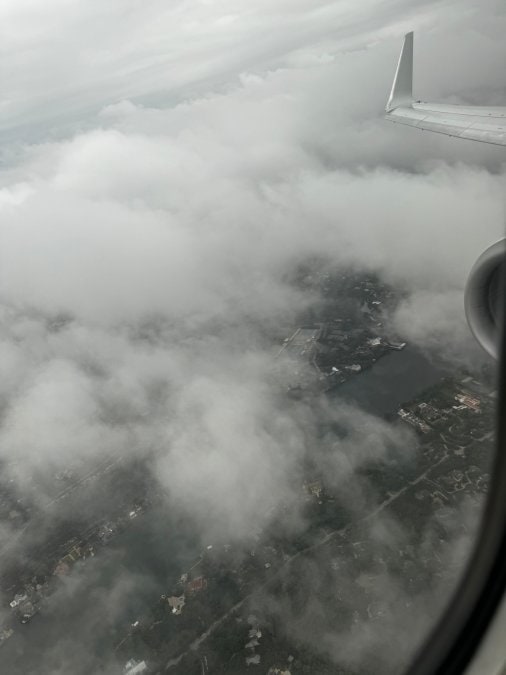
Tip: Book a window seat if you can. Seeing the horizon, and the wing flexing the way it’s designed to during turbulence, is far less scary than staring at a seatback and imagining the worst.
5. Tell the Flight Crew
Flight attendants deal with nervous flyers on almost every flight. Telling them is one of the most underused tools you have.
You don’t need a speech. “I get anxious flying. Is there anything I should know about this flight?” is enough. The crew would much rather know early than find out mid-panic.
Two Books I Give to Nervous Flyers
I’ve read both of these, and more importantly, I’ve given both as gifts to friends who had built up a real dread of flying.
- SOAR: The Breakthrough Treatment for Fear of Flying by Capt. Tom Bunn. It’s very clear about what anxiety actually is. It helped me to understand what your brain and your body are physically going through.
- How to Overcome Fear of Flying by Capt. Ron Nielsen. A simple explanation of what each noise on an airplane is. It’s incredibly comforting to know that a noise is totally normal, and in some cases, to know when to expect the different sounds.
Tip: Read these before your flight, not during it. You don’t want to be in the middle of a panic attack trying to read something to help with your panic attack.
Build a Calm Kit for Your Carry-On
Everything that calms you should be within reach at your seat. That means a personal item that fits under the seat in front of you, not a bag in the overhead bin. A soft-sided bag you can open with one hand works best (more in my guide to the best carry-on luggage).
Keep a small pouch in that bag and pack it the same way every trip, so it becomes a routine:
- Noise-canceling earbuds or headphones and a downloaded playlist or show
- Gum or mints
- A small notebook and pen
- Lotion or a familiar scent
- A printed card with your breathing steps
What I Still Carry: Bach RESCUE
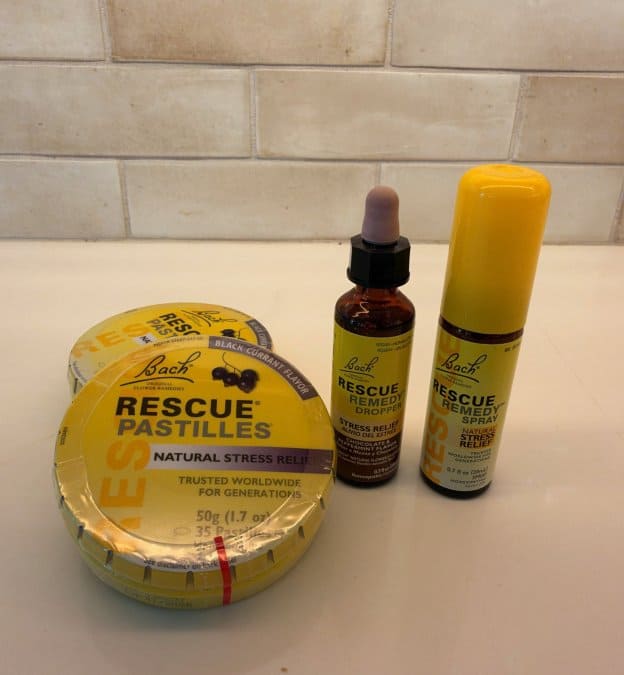
Over the years I did find one brand that worked for me: Bach RESCUE. I saw it for the first time at Heathrow and figured I had nothing to lose. That was years ago, and I still carry a few on trips.
What I like is that there are options:
- RESCUE Remedy Spray and the RESCUE Remedy Dropper when I want something right away. The dropper I carry is the chocolate and peppermint flavor, and it’s the non-alcohol version.
- RESCUE Pastilles (black currant) when I want something slower that lasts a while.
Thankfully, the newer versions taste a lot better than some of the competitors.
Both bottles are 20 mL (0.7 oz), well under the 3.4 oz limit, so they fit in your liquids bag for security. Or add all three to your Amazon cart in one click.
RESCUE is a flower-essence remedy, not a medication. Treat it as one part of your routine alongside the breathing and grounding above, and check with your doctor or pharmacist if you’re pregnant, take other medications, or aren’t sure it’s right for you.
Medication, Supplements, and Recovery After You Land
Talk to a Doctor Before You Rely on Anything
Medication and supplements can help some people, but they need a clinician’s input before you depend on them in the air. A common mistake is trying something new the night before a trip. Try it at home first, with your doctor’s OK.
Bring this to the appointment:
- How long your flights are and how often you fly
- Whether you drink alcohol on planes
- Any prescriptions you take, including occasional ones
- Whether you need help with the flight itself or with sleep the night before
A few guardrails:
- Never mix a new aid with alcohol on a flight.
- Don’t combine products that make you drowsy without guidance.
- If you’re pregnant, nursing, or managing another condition, have the conversation before you book.
The Anxiety Hangover Is Real
Even after a smooth flight, anxiety can leave you drained. Many flyers describe a crash, irritability, or foggy thinking hours after landing. What helps:
- Hydrate first. Cabin air is dry, and dehydration makes fatigue worse.
- Move. A walk after landing helps your body settle faster than sitting still.
- Eat something real. Blood sugar swings make the crash worse.
- Protect the first few hours. Don’t schedule anything demanding right after a stressful flight if you can avoid it.
- Note what worked. Write it down while it’s fresh. That’s how the next flight gets easier.
If the anxiety lasts more than a day, or you’re avoiding trips because of it, talk to your doctor or a mental health professional. Fear of flying is very treatable.
Tip: Don’t treat a bad flight as proof you can’t fly. Treat it as information for your plan.
The Bottom Line
Flight anxiety rarely fades on its own, but it gets smaller with a plan you’ve practiced: know the facts, breathe, ground yourself, give your brain a job, tell the crew, and keep your calm kit within reach.
And when you’re ready to enjoy the window seat, see what it looks like from mine in my gallery of airplane window-seat prints. For more ways to make flying easier, check out my go-to travel gear and my guide to preventing ear pain on descent.
Not medical advice. If anxiety is severe or keeps you from flying, talk to a doctor.
Flight anxiety is manageable, but only if you build the plan before you need it. Plan0gram gives you the airport guides, gear reviews, and window-seat perspective to make every trip calmer. Explore our guides, find the right carry-on for your calm kit, and browse our aviation prints to bring the view home. Get started with Plan0gram and turn your next departure into something you look forward to.