
Table of Contents
- Why Aviation Photography Prints Belong on Your Walls ✈️
- Quick Comparison: Aviation Photography Print Collections
- Metal vs Canvas Aviation Prints: Which Medium Wins?
- How to Display Aviation Art in Any Space 🏠
- Which Aviation Photography Print Is Right for You? 🛫
- Frequently Asked Questions
Why Aviation Photography Prints Belong on Your Walls ✈️
Few things stop a room cold like a great aviation photography print. A perfectly captured warbird banking against a stormy sky or a sleek jet frozen mid-climb speaks to anyone who’s pressed their face against a cabin window at 35,000 feet.
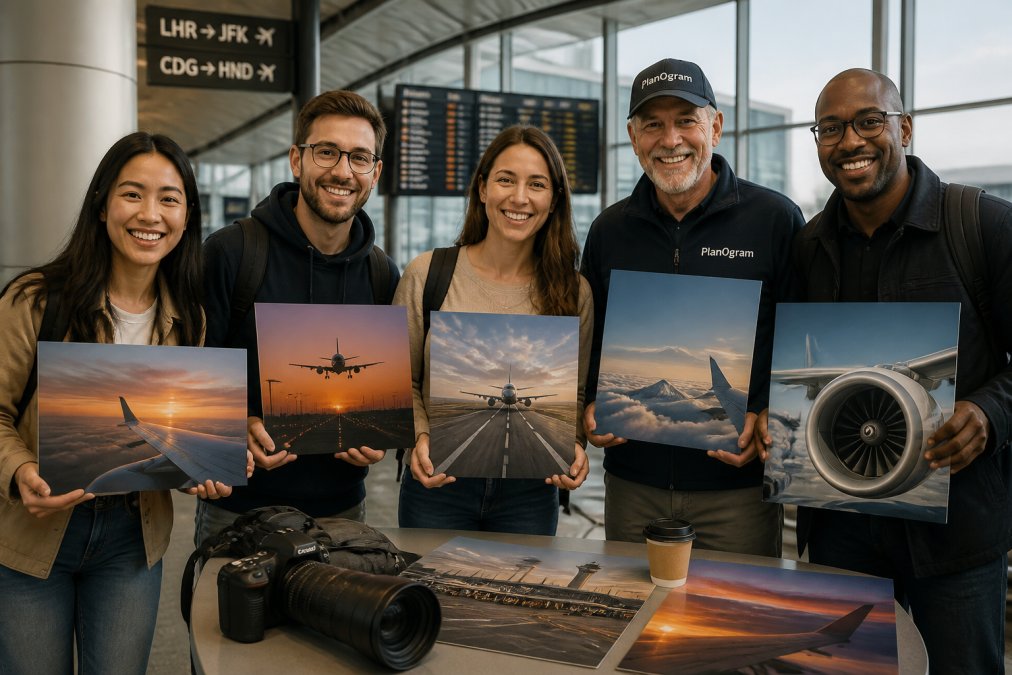
At Plan0gram, we’ve spent decades chasing that feeling. Founder Tony Yandow has logged over 34 years of flying and crossed the 3-million-mile mark, shooting from window seats around the world. These aren’t stock images, they’re the view from the seat we always fight to book.
Aviation photography prints bring that perspective home. They work in living rooms, home offices, man caves, and corporate lobbies, communicating that you understand what real flight looks like. The best prints tell a story about engineering, history, and the audacity of human flight.
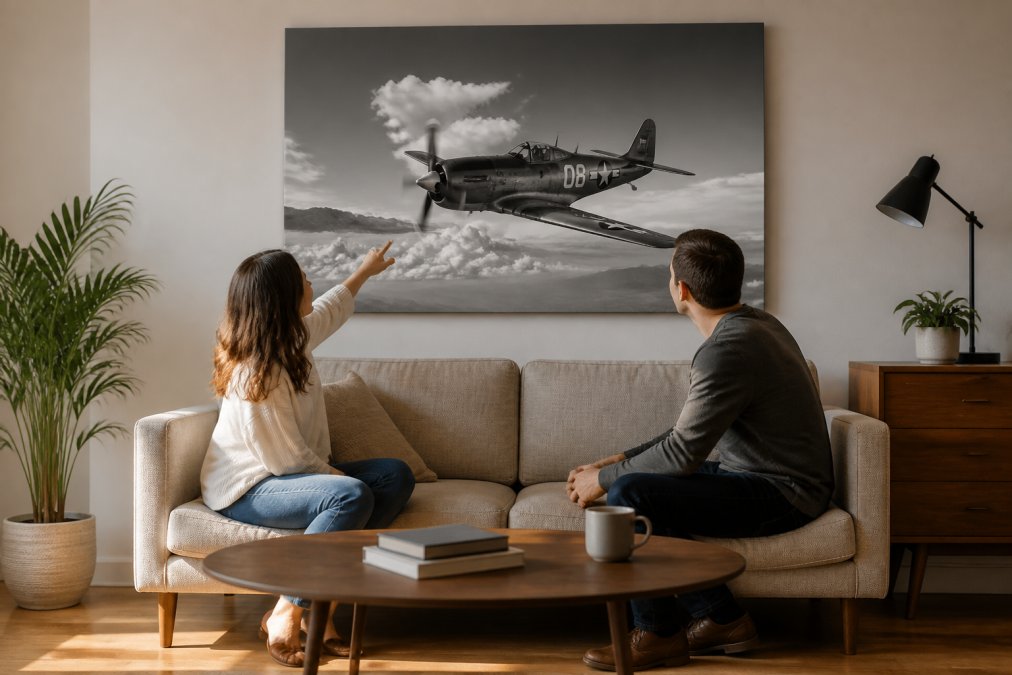
The market for aviation wall art has grown as collectors recognize that photographic prints, especially museum quality pieces, hold both aesthetic and historical value. Whether you’re drawn to the raw mechanical beauty of a WWII bomber or the clean lines of a contemporary commercial jet on final approach into ORD 🛬, there’s a print format that fits your space and your story.
Below, we’ll walk through the major collections and print types available, break down the metal vs. canvas debate, and give you a practical framework for choosing and displaying the right piece.
Quick Comparison: Aviation Photography Print Collections
|
Collection / Source |
Best For |
Print Formats |
Edition Type |
|---|---|---|---|
|
Plan0gram |
Window-seat enthusiasts, authentic in-flight perspectives |
Fine art, canvas, metal |
Curated collection |
|
AeroMedia (Dave Koch) |
Artistic, interpretive aircraft photography |
Custom sizes, B&W |
Contact for details |
|
Lijah Hanley |
WWII-era vintage aviation art |
Chromaluxe metal, fine art paper |
Limited (100 copies) |
|
Greg Brown’s Flying Carpet |
Aerial landscape perspectives |
Fine art metal prints |
Open edition |
|
Society6 Aviation |
Contemporary & abstract aviation posters |
Canvas, framed, art prints |
Open edition |
Metal vs Canvas Aviation Prints: Which Medium Wins?
Metal aviation prints are produced by infusing dye directly into coated aluminum, typically 1/8-inch thick, producing colors with exceptional depth and luminosity. They’re moisture-resistant, scratch-resistant, and easy to clean.
Canvas prints offer a warmer, more traditional feel. The texture adds dimensionality, and a well-stretched canvas with gallery wrap looks finished without framing. For black and white aviation photography, canvas often wins on warmth; for high-contrast color shots of airshow aircraft, metal pulls ahead.
According to the Library of Congress archival standards for photographic materials, museum quality production uses archival pigment inks rated for 100+ years under normal display conditions, a standard that serious aviation print producers meet.
|
Format |
Best For |
Durability |
Frame Required? |
|---|---|---|---|
|
Metal (aluminum) |
High-contrast color, modern spaces |
Excellent |
No |
|
Canvas (gallery wrap) |
Warm tones, traditional spaces |
Very good |
No |
|
Fine art paper (framed) |
B&W, limited editions, collectibles |
Excellent (with UV glass) |
Yes |
|
Acrylic |
Ultra-vivid color, contemporary interiors |
Excellent |
No |
Technical Photography Specs That Affect Print Quality
The most overlooked factor when buying aviation photography prints is source file resolution. A stunning photograph printed too large from a low-resolution file produces a muddy, pixelated result.
For reference, a high-quality 24″ x 36″ print requires a source file of at least 7,200 x 10,800 pixels at 300 DPI. Modern full-frame mirrorless systems produce files well above this threshold, which is why prints from dedicated aviation photographers consistently outperform prints from compressed stock images.
Key specs to ask about before purchasing:
- Source resolution: minimum 300 DPI at intended print size
- Color profile: Adobe RGB or ProPhoto RGB for maximum accuracy
- Ink type: archival pigment inks for longevity
- Substrate certification: acid-free paper or certified aluminum stock
- Print run documentation: numbered and signed for limited editions
How to Display Airplane Art in Any Space 🏠
Displaying aviation wall art well is half the purchase decision. A great print hung badly loses most of its impact. Aviation photography is unusually versatile: it works in formal spaces, casual spaces, and professional environments.
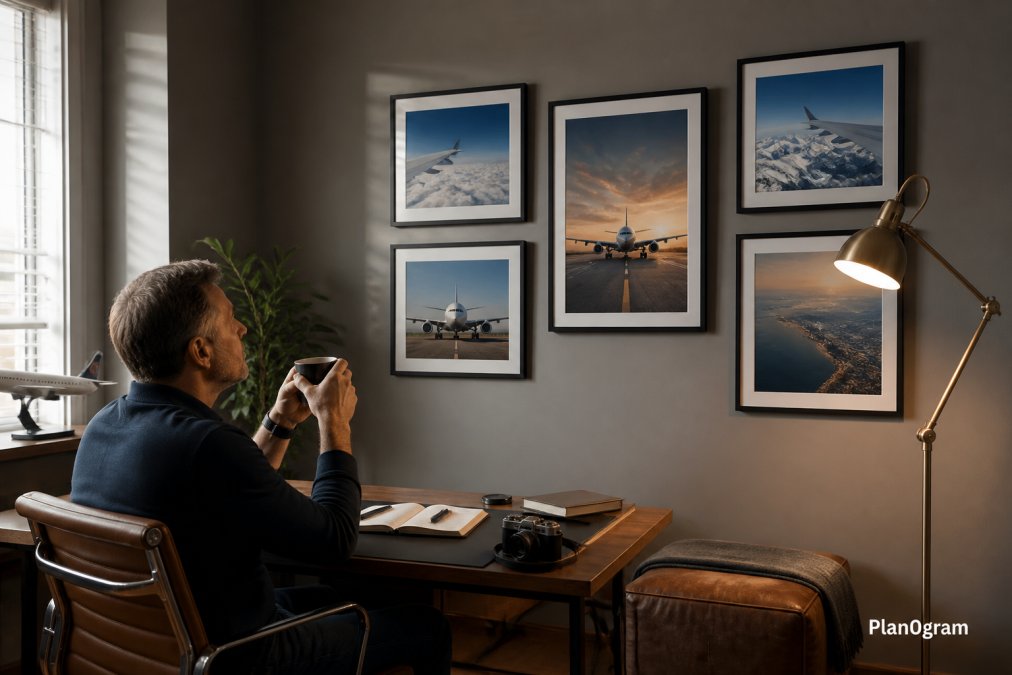
The standard rule for hanging art, center point at 57 to 60 inches from the floor, applies here, but aviation prints often benefit from going slightly higher when they depict aircraft in flight.
Interior Design Integration: From Cockpit to Living Room 🛋️
For industrial and modern spaces, large-format black and white warbird prints command a wall without competing with the architecture. For traditional or transitional spaces, framed fine art paper prints with classic molding work beautifully. For home offices, a single large print behind the desk creates an immediate focal point.
Gallery walls work particularly well for aviation collections. A mix of sizes, one large anchor print flanked by two or three smaller pieces, creates visual interest. Stick to a consistent frame finish to unify the grouping.
According to the American Society of Interior Designers’ guidance on art placement, artwork hung at eye level in the primary viewing position creates the strongest visual connection.
Which Aviation Photography Print Is Right for You? 🛫
Choosing the right aviation photography print comes down to three questions: what story do you want to tell, where will it live, and what level of investment makes sense for you.
The Appraisers Association of America’s guidance on photographic print collecting notes that limited edition, signed prints from recognized photographers hold value in ways that open-edition reproductions don’t.
Here’s a practical decision framework:
|
Your Priority |
Best Choice |
Why |
|---|---|---|
|
Authentic in-flight perspective |
Plan0gram collection |
Captured from the window seat by a 3M-mile flyer |
|
WWII history & limited editions |
Lijah Hanley prints |
Numbered editions, archival materials, WWII focus |
|
Artistic / interpretive B&W |
AeroMedia (Dave Koch) |
Aircraft as design and emotion, custom sizing |
|
Aerial landscape photography |
Greg Brown’s Flying Carpet |
Pure aerial perspective, metal prints available |
|
Contemporary / abstract styles |
Society6 aviation |
Wide range, independent artists, accessible |
|
Investment-grade fine art |
Peter Lik Aviator Collection |
Gallery-quality, significant focal point pieces |
The window-seat perspective is what sets Plan0gram’s aviation photography apart from collections that shoot aircraft from the ramp or grandstand. If you’ve ever watched a sunrise from 35,000 feet over the Rockies on a LAX-to-JFK 🛫 red-eye and thought “someone should hang that on a wall”, that’s exactly what this collection does.
Explore the work at Plan0gram and find the print that belongs in your space.
Frequently Asked Questions
What is the difference between canvas and metal aviation prints?
Canvas prints offer a warm, textured feel that suits vintage aircraft and WWII warbird photography beautifully — they absorb light rather than reflect it, giving a classic gallery look. Metal prints, typically produced on aluminum, deliver vivid color saturation and a sleek, modern finish that makes contemporary aviation posters and aerobatic photography pop. Metal is also more moisture-resistant. Your choice comes down to interior style: industrial or modern spaces favor metal; traditional or rustic spaces suit canvas. Check print sizing options and archival materials before buying.
Are limited edition aviation prints worth the investment?
Limited edition aviation photography prints — typically numbered and accompanied by a certificate of authenticity — hold their value better than open-edition prints because scarcity is documented. Collections capped at 100 copies from established photographers with a verifiable aviation heritage record tend to appreciate over time, especially WWII warbird and military aviation history subjects. For investment purposes, prioritize archival-quality paper or museum-quality materials, proper documentation, and a photographer with a recognized body of work. Storage and display conditions also affect long-term value significantly.
What are the best materials for aviation photography prints?
For longevity, archival paper with pigment-based inks is the gold standard for fine art photography prints — properly stored, these can last 100+ years without fading. Chromaluxe metal prints bond the image directly to aluminum, making them scratch-resistant and ideal for high-humidity areas. Canvas prints stretched on kiln-dried wood frames resist warping. For black and white aviation photography, fiber-based archival paper delivers the deepest tonal range. Always confirm that a seller uses gallery-quality printing materials and offers a certificate of authenticity for numbered editions.
How do I choose the right size for aviation wall art?
Measure your wall space before ordering. A standard rule: the print should occupy 60–75% of the wall width above a piece of furniture. For a focal-point statement — think a P-51 Mustang or Blue Angels formation shot — go large, 24×36 inches or bigger. Smaller prints (8×10 or 11×14) work well in gallery wall arrangements. High-resolution source files matter here: a low-res image printed large will lose sharpness. Ask sellers about the original file resolution and recommended maximum print sizing before committing to a large-format order.
How should I display aviation photography in a professional space?
In an office or boardroom, metal wall art or framed fine art photography prints in neutral tones read as sophisticated rather than decorative. Black and white aviation prints — especially engineering marvels or aeronautical photography of classic jets — pair well with glass, steel, and dark wood finishes. Avoid direct sunlight on any print medium; UV-filtering glass or acrylic glazing protects colors. For a cohesive look, group prints by theme: warbird photography in one cluster, aerial photography in another. Keep frames consistent in finish for a curated, gallery-quality result.
This article was written using GrandRanker