This post contains affiliate links. As an Amazon Associate, I earn from qualifying purchases, at no extra cost to you.
Last Updated: October 5, 2026
Do You Actually Need a Luggage Scale?
Here’s the part most luggage scale articles skip: the big U.S. airlines (American, United, Southwest, Alaska and JetBlue) don’t set a weight limit for carry-on bags. Delta only weighs carry-ons on a few international routes. Where a scale really earns its spot in your bag is in two places: your checked bag, where most U.S. airlines charge extra above 50 pounds in economy, and international or budget airlines, where carry-on limits can be as low as 15 pounds.
A luggage scale settles both before you leave the house, and it costs less than one overweight-bag fee.
Why I Started Carrying a Luggage Scale
Way back when, if I thought a bag was close, I’d pick it up and step on the household scale. Then we moved one of our kids back to college. She had so many bags, all filled with heavy shoes, books and who knows what else, and I thought two of them were close to the limit.
We had figured out that flying first class on United, which comes with free checked bags, would be cheaper than paying for all of them. That would have been the case if every bag had been under the weight limit. Two of the four checked bags were over.
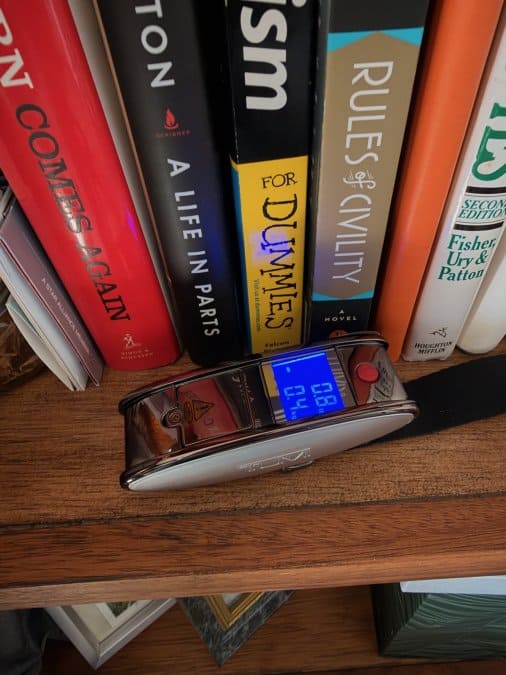
Driving home from the airport, still in shock over what I’d just paid for bags, I ordered a luggage scale that same day. Don’t make the same mistake. They’re so small that I even bring one on international trips, when I know I’m coming home with more than I left with. I can count three different times I’ve had to repack to move weight around, something I wouldn’t have known without my inexpensive scale.
This guide covers the best luggage scales for carry on weight limits, how to test the one you buy, and what to do when the number comes back ugly.
Carry-On Weight Limits: Where They Actually Apply
Weight rules vary by airline, cabin and route, so the same bag can sail through on one trip and get weighed on the next. As of this writing:
- Big U.S. airlines on domestic flights: American, United, Southwest, Alaska and JetBlue have no carry-on weight limit. Size is what they check.
- Delta: no general limit, but carry-ons are capped on a few international routes, such as 15 pounds to and from Singapore.
- Budget U.S. airlines: Frontier caps carry-ons at 35 pounds.
- Many international airlines: economy carry-on limits of roughly 15 to 22 pounds are common, including Emirates, Singapore Airlines, Qatar Airways, Cathay Pacific, Virgin Atlantic and Japan Airlines.
- Checked bags: most U.S. airlines charge an overweight fee above 50 pounds in economy.
Limits change, so check your airline’s baggage page the week you fly, especially if your trip includes an international or partner airline.
Size vs. Weight: Two Different Battles
A bag can pass the sizer and still fail the scale. Size limits govern whether your suitcase fits the overhead bin; weight limits govern whether you’re allowed to lift it there. On U.S. domestic flights, size is usually what gets checked. On many international and budget airlines, weight is the stricter rule. A luggage scale can’t tell you whether your bag fits the sizer, so you need to check both.
Best Luggage Scales for Carry-On Weight Limits: Feature Comparison
Here’s the short version: a digital scale with a hook, a 110 lb (50 kg) capacity, and a hold function covers most travelers. Strap models suit soft duffels better, and manual spring scales are the battery-free backup.
Type | Capacity | Power | Best For | Key Feature |
|---|---|---|---|---|
Digital hook scale | 110 lb / 50 kg | 2x AAA or coin cell | Most carry-on bags | Hold and tare functions |
Digital strap scale | 110 lb / 50 kg | Rechargeable | Duffels, soft bags | Wide, non-slip grip |
Manual spring scale | 75-90 lb | Battery-free | Backup and off-grid | No batteries to die |
Compact travel scale | 88 lb / 40 kg | Coin cell | Minimalist packers | Fits in a pocket |
The differences come down to how you lift and how you read. Everything else is marketing.
What Makes the Best Digital Luggage Scale Worth Packing
A good digital scale reads within a fraction of a pound, holds that reading steady while you set the bag down, and survives being crammed into a side pocket for years. Anything less is a novelty.
Capacity, Accuracy, and the Specs That Matter
Look for a maximum weight of at least 110 lb (50 kg) so you can also weigh a checked bag. Accuracy within 0.1 lb is plenty. A tare function lets you zero out a bag’s own weight, and a hold function freezes the reading after you set the bag down, which matters because you cannot read a screen while holding a suitcase at arm’s length.
Hook vs. Strap: Which Design Works Better
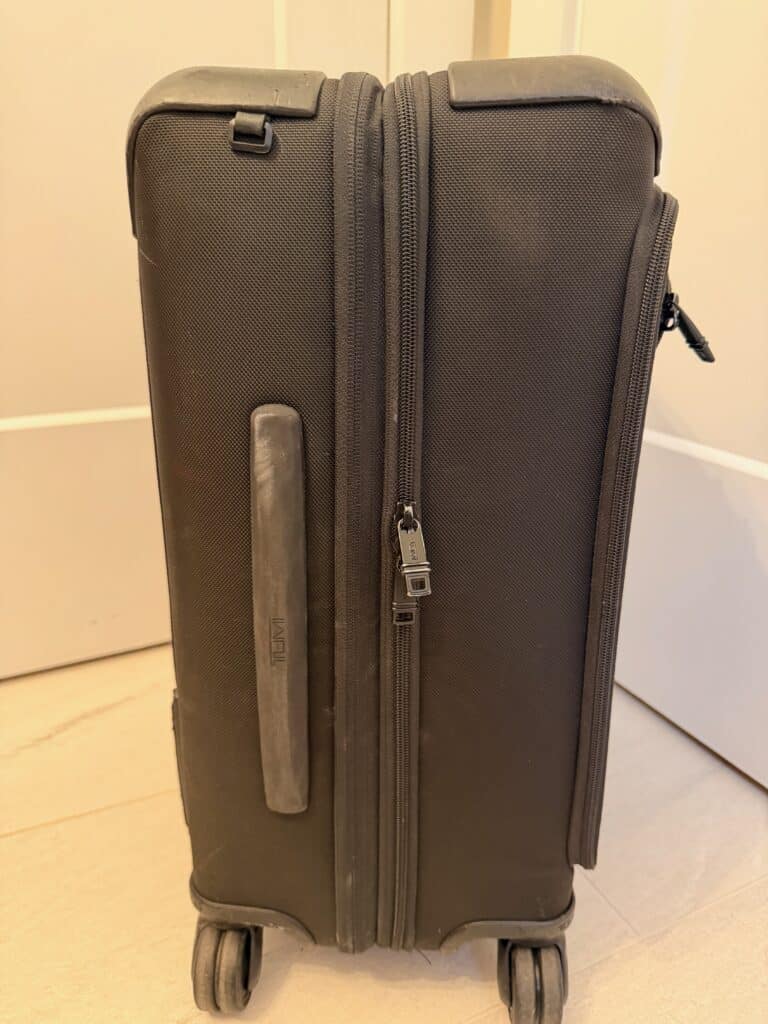
Hook scales clip straight onto a hard-shell handle and give the most stable lift. Strap scales wrap around soft or awkward handles and are gentler on duffel grips. If you carry a roller bag, buy a hook. If you carry a duffel, buy a strap.
Portable Luggage Scale Accuracy: How to Test Yours at Home
Test it once and you’ll trust it forever. Grab a known weight, lift it slowly, and see what the screen says.
- Find a dumbbell or a full water bottle of known weight
- Hook the scale and lift smoothly to a steady hold
- Note the reading and compare it to the true weight
- Repeat three times to check for consistent readings
- Accept anything within about 0.2 lb as accurate enough
Consistency matters more than perfection. A scale that reads two pounds heavy every single time is still useful, because you can pack to a lower target. A scale that jumps around is not.
How to Weigh a Carry-On Bag Accurately Before You Leave
Weigh the fully packed bag, not the empty one. Load everything first, including the laptop, the souvenirs, and the jacket you plan to wear on the plane. Then follow this sequence, it takes ninety seconds and it is the difference between a clean pass and an overweight fee.
The Step-by-Step Method
- Zero the scale. Turn it on and confirm it reads 0.0 lb. If your scale has a tare function and you’re weighing a bag inside a tote or with a strap, tare the container first.
- Attach at the balance point. Hook the scale to the bag’s top handle, centered, not off to one side. An off-center lift tilts the bag and throws the reading off by a pound or more.
- Lift smoothly, don’t jerk. A quick yank makes the load cell overshoot. Lift until the bag clears the floor and hold it steady at arm’s length or lower.
- Wait for the hold function to lock. Do not read the screen while the number is still climbing. Most digital scales freeze the reading after a second or two, that frozen number is the one to trust.
- Set the bag down and repeat. Take three readings. If they agree within about 0.2 lb, you’re done. If they swing by a pound or more, your lift is uneven or the scale is drifting.
- Weigh the night before, not at the curb. You want time to repack if the number comes back ugly.
What to Do When Your Carry-On Is Overweight
You have options, and none of them involve arguing with the gate agent.
- Move heavy items into a personal item or your pockets
- Wear your bulkiest jacket and shoes onto the plane
- Repack dense items like chargers and books into a tote
- Prepay a checked bag online if the airline allows it
- Ship a small box ahead if the trip is long
Prepaying online almost always beats paying at the gate, where the fee is highest. And if you fly often, a scale pays for itself the first time it saves you an overweight charge.
Conclusion
Whether it’s a 50-pound checked-bag limit at home or a 15-pound carry-on cap overseas, a tested, reliable luggage scale is the cheapest insurance you can pack.
Plan0gram is a frequent flyer’s guide from the window seat: airport guides, seat tips and honest gear picks from 34 years and 3 million miles of flying. Grab the free Window Seat Cheat Sheet before your next trip.