This post contains affiliate links. As an Amazon Associate, I earn from qualifying purchases, at no extra cost to you.
Last Updated: October 12, 2026
Why Frequent Flyer Comfort Starts Before You Book
Frequent flyer comfort means managing your body, your schedule and your gear so a long flight leaves you functional, not wrecked. After 3 million miles, I’ve learned that three decisions you make before you ever reach the gate matter more than anything that happens on board:
- Timing: when you fly, and how much connection time you leave.
- What you carry on: the bag and the kit that get you through the flight.
- Fatigue prevention: how you handle long-haul flights and jet lag.
The biggest mistake is treating comfort as an on-board problem. By the time you sit down, the dry air, the cabin pressure and a fixed sleep window are already working against you.
Key Takeaway
Get the timing, the carry-on and the fatigue plan right before you leave home, and the flight takes care of itself.
1. Timing: When You Fly and How You Connect
My 6 A.M. Rule (and When I Break It)
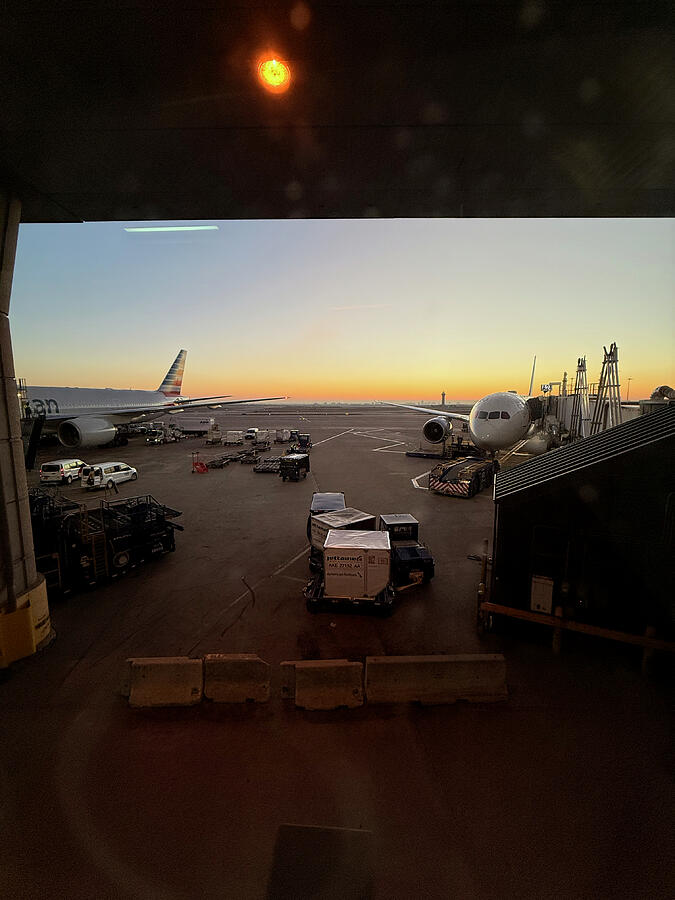
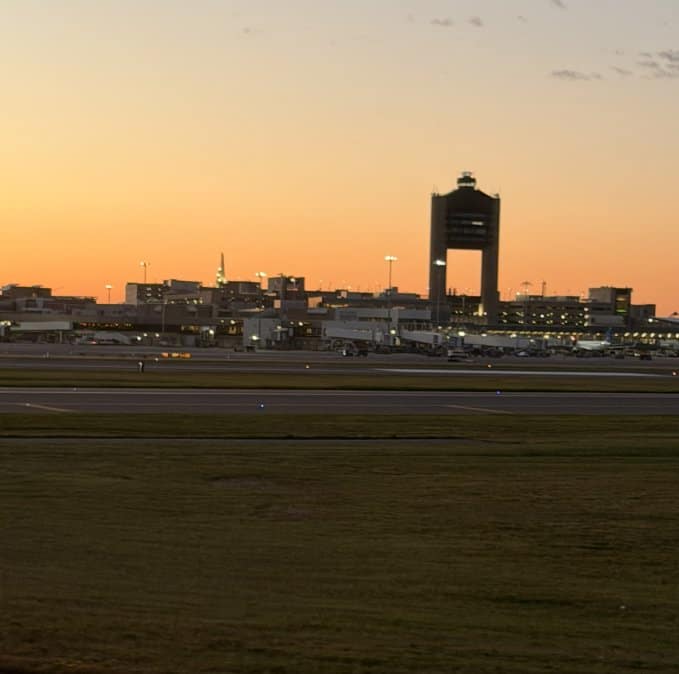
The first flight of the day is rarely delayed by weather or air traffic control somewhere else, because the system hasn’t had time to back up yet. That makes the 6 a.m. departure tempting. I only book it when two things are true.
Setting the alarm for 3 a.m. is worth it. An early flight is a short night. I take it when getting there on time matters more than sleep.
My destination can handle an early arrival. If I fly from Boston to the West Coast at 6 a.m., I land around 9 or 10 a.m. local. I don’t want to be wandering around with my bags until a 3 p.m. check-in. Early check-in is usually a perk of being loyal to one hotel brand, so if you have status with a chain, use it. Whether I can check in early really does decide whether I book that flight.
Check the night before. Before an early flight I look up my aircraft on FlightAware to see whether it arrived on time the night before. This matters most outside the hubs. Boston isn’t a hub for United or American, so if the inbound plane landed four hours late, the crew may be timed out and unable to legally fly at 6 a.m. A non-hub city rarely has a backup crew waiting.
The rule doesn’t apply to international flights. For those I prefer the later evening departures. Yes, there’s more delay risk, but I want to sleep through most of the overnight flight so I land closer to the new time zone.
Connection Times: How Much Is Enough in 2026
International: at least 3 hours. Europe’s new electronic border systems are causing huge delays. They will get better, but they aren’t there yet. On a recent trip leaving Italy, we got to the airport 3.5 hours before our flight. By the time we’d cleared security and the immigration scanners, the flight was already boarding.
Domestic: match the connection to the city. If I’m connecting in Chicago to Dallas, there are several flights every hour, so a long layover buys me nothing. If I miss one, there’s another right behind it. Chicago in winter is a different story, so I give myself more time from December to February.
Know your next options, and move early. Before you travel, know the later flights to your destination. The minute you see weather delays building along your route, call or use the app to move to a later flight. Don’t wait for the cancellation. By then everyone on your flight is competing for the same seats.
Have a backup airport. When weather in Charlotte wiped out my direct flights home for two days, a flight into Providence that left two hours later got me home. I explain why PVD is my go-to backup in my PVD airport guide.
2. What You Carry On, and Why
Soft-Sided vs. Hard-Sided Carry-Ons
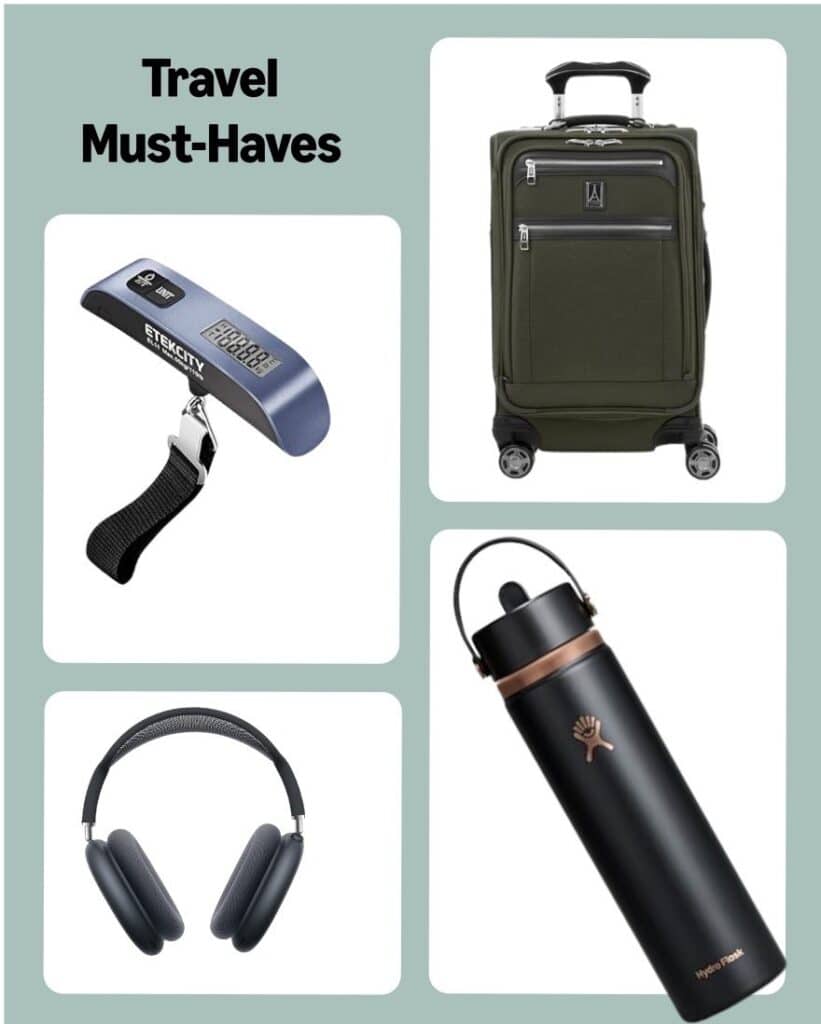
I travel only with soft-sided bags. A soft bag squeezes into a tight overhead bin, takes one more layer when you need it, and has outside pockets for the things you reach for in flight. My wife insists on hard-sided. She likes the way it protects what’s inside, and that’s a fair point if you pack fragile items.
Whichever you choose, size it to your airline’s sizer rather than the maximum the rules allow. Then pack for the cabin, not the destination. A checked bag can go missing, but your carry-on gets you through the first 24 hours.
Shop: soft-sided spinner carry-ons on Amazon · hard-sided carry-ons on Amazon
What’s in My Cabin Kit
I keep this kit packed permanently, so I never have to repack it in a hurry.
Every flight:
- A really light sweatshirt in my computer bag under the seat in front. Cabins swing from warm at the gate to cold at cruise, and it doubles as a pillow or lumbar roll. (lightweight sweatshirts)
- Advil, Dramamine, tissues and cough drops. Everything I’ve ever wished I had at 35,000 feet. (Dramamine)
- Noise-canceling headphones, plus a wired backup for the seatback screen. (noise-canceling headphones)
- A charger and a power bank that’s allowed in the cabin. (power banks)
- A refillable water bottle, emptied before security and filled at the gate. Mine is a Hydro Flask with a flex straw lid. (Hydro Flask on Amazon)
Added for international flights:
- Compression socks, put on before boarding, not at cruise. (compression socks)
- Lip balm and saline nasal spray for the dry cabin air. (saline spray)
3. Fatigue Prevention: Long-Haul Flights and Jet Lag
Hydration, Food and Cabin Air
On a long flight, comfort comes down to fluids, food and air. Cabin humidity drops to desert levels, so sip water steadily instead of gulping it. Go easy on alcohol and heavy, salty meals, which dehydrate you and disrupt sleep. Saline spray and eye drops help with the dryness.
Compression socks help circulation on long sits. Noise-canceling headphones cut more than engine drone; they reduce the background noise that leaves you tired when you land. Wear loose layers and shoes that slip off easily, because feet swell at altitude.
Item | Why it helps | When to use |
|---|---|---|
Compression socks | Supports circulation on long sits | Before boarding |
Noise-canceling headphones | Cuts engine drone and fatigue | Gate to landing |
Saline nasal spray | Counters dry cabin air | Every 2–3 hours |
Light sweatshirt | Warmth, pillow, lumbar roll | At cruise |
Sleep and Jet Lag on Overnight Flights
Jet lag is a mismatch between your body clock and the local clock. The fix is a schedule, not a supplement.
Set your watch to destination time at the gate. If it’s night where you’re going, sleep on the plane. If it’s daytime, stay awake. This is why I book later overnight departures: I can sleep through most of the flight.
Use light. Flying east, get bright light in the morning after you land. Flying west, get late-afternoon light and skip the bright mornings for a day or two.
Arrival day. Get outside in daylight within an hour of landing. Walk, drink water and eat on the local schedule even if you’re not hungry. Keep any nap to 20–30 minutes and push to a normal local bedtime.
Watch Out
Alcohol isn’t a sleep aid on a plane. It shortens deep sleep and wakes you up at 3 a.m. cabin time.
Conclusion: Buy the Trip You Want
Frequent flyer comfort is a system, not a gadget. Pick departure times that fit the trip, leave connections that fit the city, carry a bag that works for you, and plan for fatigue before it hits. It’s the difference between arriving ready and arriving ruined.
Never count on a free upgrade. Don’t expect one because of your status or your credit card. There is almost always someone who has flown more or paid more than you, and you will be nothing but disappointed. Buy the ticket you want. If you can’t pull the trigger on first class, buy at least premium economy (Premium Plus on United) for any flight over five hours. Then use miles to buy the upgrade to business or first. Don’t let a missed upgrade set the tone for your whole trip.
Plan for the long layover or delay, too. On some airlines, a paid seat upgrade comes with lounge access and a better deal on checked bags. Those are worth weighing when you book, because they make the bad days much easier.
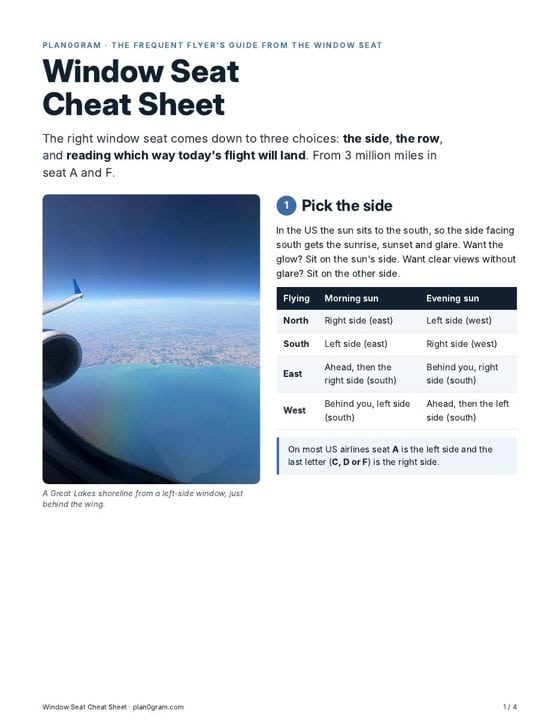
All of these choices have the same goal: making your travel as stress-free as possible. Before your next flight, grab the free Window Seat Cheat Sheet. It covers where to sit for the best views, which side of the plane to pick and how to get the shot.