Last Updated: November 4, 2026
Why the Window Seat Is the Best Seat for Sleep
The window seat is the best seat for sleep because it gives you a wall to lean on, a view to rest your eyes on, and one less neighbor to climb over. If you want to actually sleep on a plane, start here, because the seat itself does half the work.
Frequent flyers know the pattern well: the middle seat fights you. The aisle seat keeps you half-awake, waiting for someone’s hip to brush your shoulder. The window gives you a corner, and corners are where humans sleep.
There is a catch. A window seat only helps if you plan for it. Pick the wrong row and you get a wing view with no recline. Pick the wrong side and you get sunrise in your face at 5 a.m.
- Lean on something solid. The cabin wall is free support no other seat offers.
- Control your light. The shade is yours to raise or drop.
- Skip the traffic. Nobody steps over you mid-nap.
If seat maps confuse you, how to choose the best seat on any flight is a good place to start.
What to Do Before Boarding to Set Up a Good Sleep
Sleep on a plane starts at the gate, not at 35,000 feet. The travelers who conk out early are the ones who set it up before they sat down.
Here is a pre-flight routine that can help:
- Book the window early. Seat selection opens at booking, so grab it then.
- Pick a red-eye or early departure if your schedule allows. A late flight lines up with your body clock.
- Eat light at the airport. A heavy meal keeps you awake and uncomfortable.
- Walk the terminal. Twenty minutes of movement helps you settle later.
- Use the restroom right before boarding. Fewer mid-flight trips, less disruption.
- Charge everything. A dead phone at 2 a.m. is a wake-up call you did not want.
For the bigger picture on flight timing and carry-on prep, see our frequent flyer comfort guide.
The Best Travel Pillow for Window Seats
The best travel pillow for window seats is a flat-backed memory foam model that sits between your head and the cabin wall, not a bulky U-shape around your neck. Window sleepers lean sideways, so you want support that stays put.
A common mistake is buying the biggest pillow on the shelf. It looks comfortable in the store and turns into a neck brace at altitude. Flat-backed designs let your head rest against the wall without shoving your chin forward.
What most guides miss is the wall itself. On many airplanes the sidewall curves inward near the top, so a pillow with a slightly angled back grips better than a perfectly flat one.
Best for: Side sleepers who lean into the wall. Skip if: You sleep upright and only need neck support.
Our travel gear guide covers comfort picks for the road.
Airplane Sleep Essentials to Pack in Your Carry-On
Airplane sleep essentials come down to four jobs: block light, block noise, stay warm, and stay hydrated. Pack for those four and you cover almost every reason people wake up.
A carry-on sleep kit can include:
- Eye mask. A contoured mask that does not press on your eyes.
- Earplugs or noise-canceling earbuds. Foam plugs are tiny and effective.
- Light blanket or large scarf. Cabin air runs cool once the lights go down.
- Compression socks. Long flights and still legs do not mix well.
- Reusable water bottle. Fill it after security, not before.
- Toothbrush and moisturizer. A small reset before you land.
Hydration deserves its own plan. For more on staying hydrated on long haul flights, see our guide.
How to Position Your Body and Pillow in a Window Seat
Good positioning in a window seat is about three contact points: your head against the wall, your hips square in the seat, and your feet flat or slightly raised. Get those right and your body stops fighting the seat.
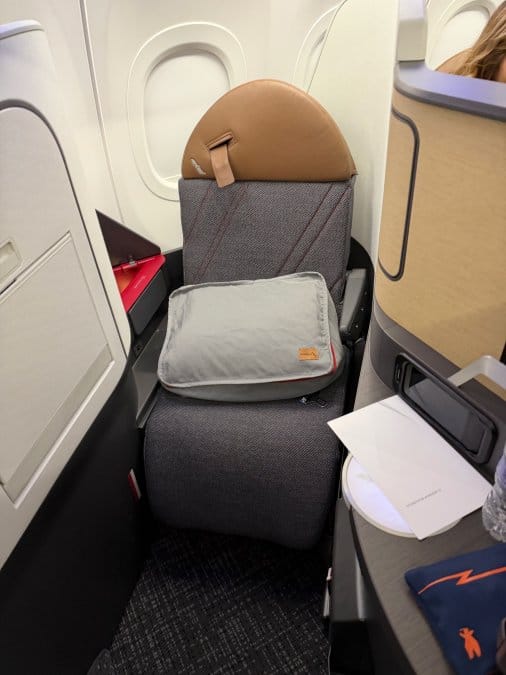
The part most guides skip is the sidewall itself. On a narrowbody like a 737 or A320, the interior panel curves inward above shoulder height, so the usable flat surface is smaller than it looks from the seat map.
Here is one way to set up:
- Recline first, then arrange. Seat back goes back before pillows come out. On most mainline airplanes the window seat reclines about the same as the aisle, but bulkhead and exit rows are the exception, they often lock upright.
- Tuck the pillow between your head and the wall. Angle it so your neck stays neutral. A flat-backed pillow with a slight wedge grips the curved panel better than a perfectly square one.
- Drop the armrest on the wall side. It gives your shoulder room to settle and lets you get closer to the panel.
- Cross your arms or rest hands in your lap. It stops the slow slide forward that happens once you relax.
- Loosen your shoes. Feet swell at altitude, and tight laces wake you up.
- Use the blanket as a wedge. Rolled up, it fills the gap between shoulder and wall, the single most useful trick on a long-haul widebody.
Watch out: if the passenger in front reclines hard, your knee room shrinks and your lean angle changes.
For travelers with motion sensitivity, the window is usually the better seat because your eyes and inner ear agree when you can see the horizon.
A final note on posture: leaning fully into the wall without a pillow puts your neck at an angle for hours, and you will feel it when you land. The fix is a pillow that fills the gap, not a bigger pillow that pushes your head forward.
Here is the setup sequence that keeps your body settled against the wall.
Step | What to do |
|---|---|
1 | Recline the seat back before arranging pillows |
2 | Tuck pillow between head and wall, neck neutral |
3 | Drop the armrest on the wall side |
4 | Cross arms or rest hands in your lap |
5 | Loosen your shoes as feet swell at altitude |
6 | Roll the blanket to fill the shoulder-to-wall gap |
How to Block Light and Noise for Deeper Sleep
Light and noise are the two biggest sleep thieves in any cabin, and a window seat gives you an edge on both. The shade handles light. The wall and a good mask handle the rest.
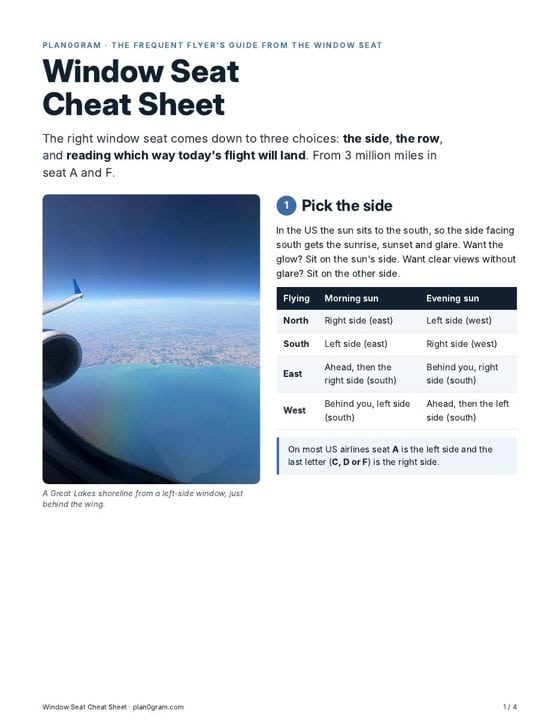
Sunrise is the sneaky one. Eastbound flights often catch first light right at your shoulder, and a thin shade does not stop it. A contoured eye mask fixes what the shade cannot.
Noise is trickier. Engine hum is steady and easy to tune out. It is the announcements, the cart, and the seatbelt chime that jolt you. Foam earplugs take the edge off all three while still letting you hear a crew instruction.
A useful tip: put your mask on before the cabin lights dim, since the dark can signal your body to start winding down.
Common Mistakes That Keep You Awake in a Window Seat
The mistakes that ruin window-seat sleep are predictable, and most of them happen before takeoff. Fix these and you remove most of the reasons you stay awake.
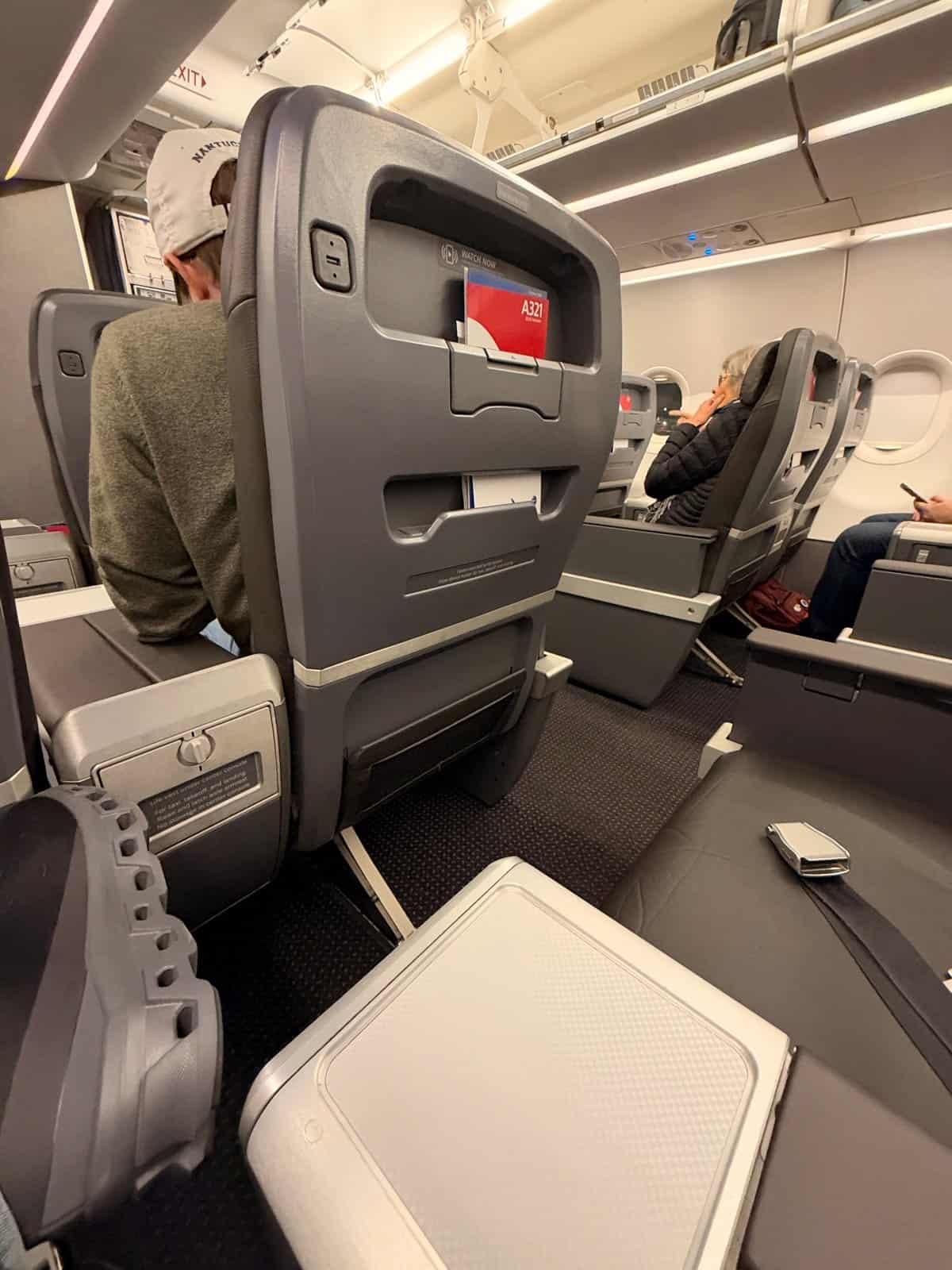
- Booking a bulkhead or exit row. Extra legroom, no recline, no under-seat bag.
- Choosing a seat over the wing. Great view, and more engine noise right next to you.
- Skipping the seat request at check-in. If your assignment changes, ask early. See how to request a window seat at check-in for more.
- Drinking caffeine after security. It stays in your system longer than you think.
- Waiting until you are exhausted to get comfortable. Set up at cruise, not at hour six.
- Ignoring the seatbelt sign. Keep it fastened over your blanket so a bump does not catch you loose.
The bigger mistake is treating turbulence as a sleep-killer instead of a planning problem. A short, clear plan before, during, and after rough air can help more with rest than any single piece of gear.
Before the flight. Check the seat map for a row forward of the wing, and pick a window on the side away from the morning sun if you are flying east.
During the flight. When the seatbelt sign comes on, fasten it over your blanket and stay put.
After the rough air. Reset your setup: pillow back against the wall, mask on, blanket wedged. The body’s fear response, faster heart rate, tense shoulders, fades once the bumps stop, but only if you give it a signal to settle.
Watch out: if you are traveling with a child in the window seat, keep the shade partly up during daylight so they can see the horizon, and keep their seatbelt low and tight over the lap.
None of this replaces crew direction. If a flight attendant tells you to do something, do it, the plan above is for the routine bumps, not for an instruction.
Build Your Window Seat Sleep Kit Before Your Next Flight
A window seat sleep kit is a small pouch you pack once and refill after every trip. Build it now, and every future flight starts easier.
Here is the checklist we use:
- Contoured eye mask
- Foam earplugs plus backup pair
- Flat-backed travel pillow
- Light blanket or large scarf
- Compression socks
- Empty reusable water bottle
- Small toiletry pouch
- Phone cable and battery pack
Pack it the night before. The travelers who sleep well are rarely the ones scrambling in the terminal.
As an Amazon Associate, Plan0gram earns from qualifying purchases. Some links in this post are affiliate links, which means I may earn a small commission at no extra cost to you.
Here’s what I’d put in the kit: a contoured eye mask, foam earplugs, a memory foam travel pillow, a packable travel blanket, compression socks, a Hydro Flask 24 oz with the flex straw and a small power bank.
Sleeping well in a window seat is a skill, and like any skill it rewards preparation over luck. Plan0gram was built for exactly this: 34 years of flying and three million miles of hard-won lessons, turned into honest gear reviews, airport guides, and practical tips you can use on your next flight. Start with our travel gear picks, then build your own kit and claim that window. Get started with Plan0gram and turn your next red-eye into real rest.