Last Updated: October 19, 2026
This post contains affiliate links. As an Amazon Associate, Plan0gram earns from qualifying purchases, at no extra cost to you.
Why Long Haul Flights Dry You Out
Cabin air on a long haul flight is drier than most deserts. At cruising altitude, humidity inside the cabin often drops below 20%, and on some aircraft it sits closer to 10%. Your body loses water just breathing that air.
The result shows up fast: dry mouth, dry skin, nasal dryness, and thirst you can’t shake. According to the FAA cabin air quality research, cabin humidity on long flights is far lower than what your body is used to on the ground.
Hydration is one of the few things you fully control. Here’s how to stay hydrated on long haul flights, even from the window seat, without living in the aisle.
How Much Water to Drink on a Long Flight
The honest answer: there is no single number that fits every traveler. A common rule of thumb is about 8 ounces (roughly a quarter liter) of water per hour in the air. For a 10-hour flight to Europe or a 12-hour hop across the Pacific, that puts you in the 80 to 100 ounce range. But that is a starting point, not a prescription.
What actually moves your number:
- Body size. A 130-pound traveler and a 220-pound traveler do not lose fluid at the same rate. Scale the target roughly to your weight rather than treating 8 ounces as gospel.
- Activity. Walking the aisle, standing in the galley, or doing a lap through the terminal during a long layover all raise your loss. Sitting still in a lie-flat seat lowers it.
- Cabin conditions. A full, warm cabin pulls more fluid than a half-empty, cool one. Newer jets like the 787 and A350 run a little more humid than older aircraft, but every cabin is still far drier than the ground.
- What else you drink. Every alcoholic drink or coffee adds to the deficit rather than offsetting it.
- Health conditions and medications. Diuretics, blood pressure meds, and some diabetes medications change how your body handles fluid. So do kidney and heart conditions. If any of that applies to you, your clinician’s guidance beats any general target.
A Realistic Target by Flight Length
Flight Length | Target Water | Roughly |
|---|---|---|
6 hours | 48 oz | 1.4 L |
8 hours | 64 oz | 1.9 L |
10 hours | 80 oz | 2.4 L |
12 hours | 96 oz | 2.8 L |
14 hours | 112 oz | 3.3 L |
Treat the table as a range, not a finish line. If you land, urinate pale yellow, and feel clear-headed, you hit it. If you land with a headache and dark urine, you undershot regardless of what the table said.
Signs You Are Behind on Fluid Intake
Your body signals dehydration before it becomes a problem. Watch for:
- Dry mouth and thirst that returns quickly
- Dark yellow urine
- Headache or lightheadedness
- Dry skin and nasal dryness
- Fatigue that sleep doesn’t fix
If two or more show up, drink a full glass of water and skip the coffee cart.
Your Pre-Flight Hydration Timeline
Starting hydration before travel matters more than most people think. You can’t fix a dry flight in the air alone.
24 Hours Out
Drink water normally the day before. Add one extra glass with each meal. Skip the salty airport food the night before if you can. Alcohol the night before a long flight works against you.
At the Airport
Airport terminals are dry too. Keep drinking once you clear security. Fill your bottle at a water fountain after the checkpoint. Most US hubs have refill stations near the gates.

TSA rules on bringing empty bottles through security allow an empty refillable bottle through the checkpoint. Fill it on the other side.
The Best Water Bottle for Air Travel
A refillable bottle is the single best piece of hydration gear you can pack. Look for one that’s leak-proof, fits a seat-back pocket, and holds at least 24 ounces.
The Bottle I Actually Carry: Hydro Flask 24 oz Flex Straw
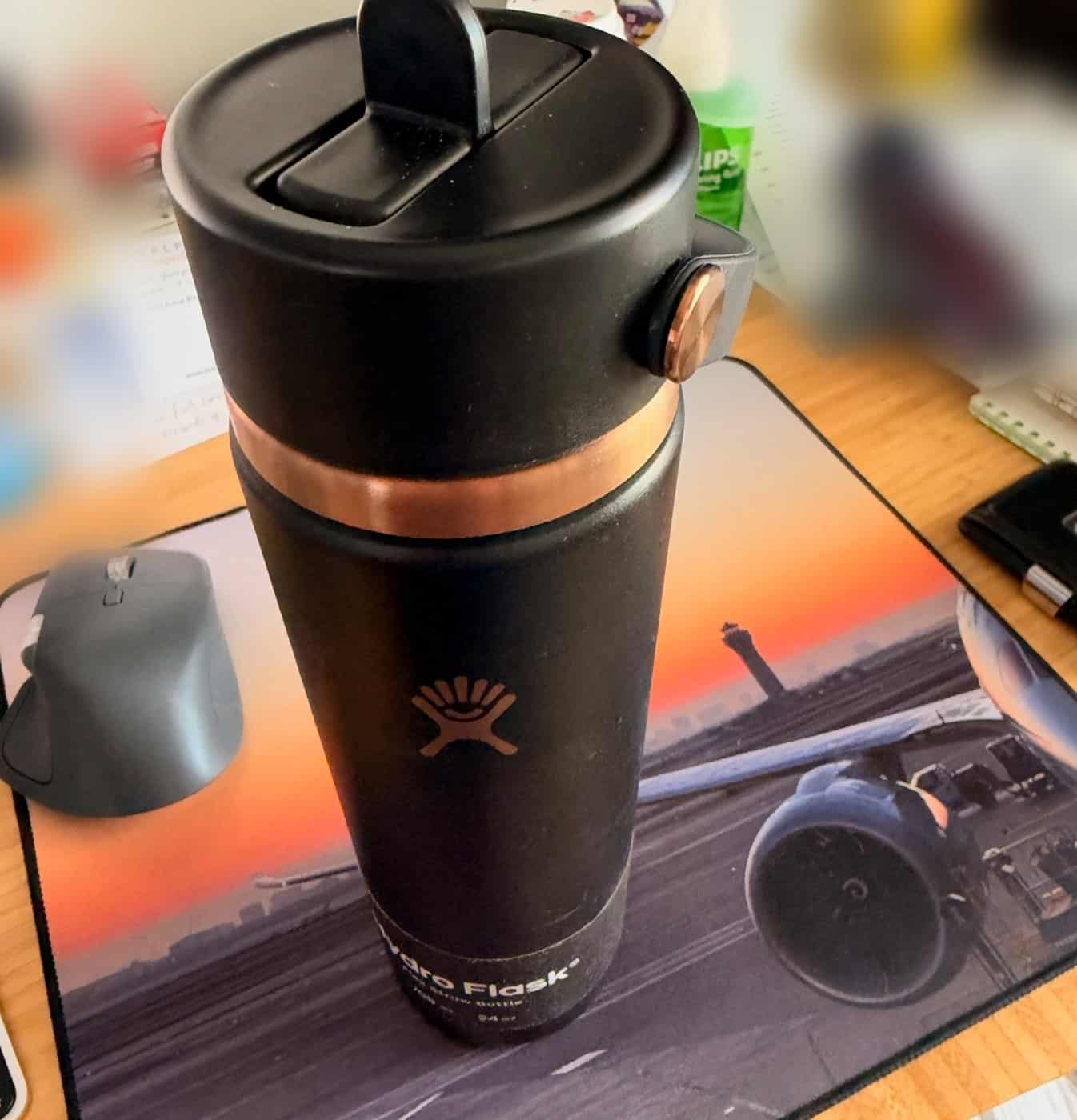
I have tried plenty of bottles. The one that goes on every trip is the Hydro Flask 24 oz Flex Straw Bottle. This is my third one, and all three of my kids carry the same bottle.
- Slim enough to fit anywhere. It fits a rental car cup holder and the side pocket on my backpack.
- Keeps ice for hours. Leaving Boston, the Admirals Club staff filled it with ice and water for me. When I landed at LAX five and a half hours later, most of the ice was still there.
- Sturdy handle. It clips to a suitcase when your hands are full at the gate.
- Flip-up straw. Easy sipping in a tight seat, no cap to unscrew.
Lounge tip: ask the bartender to fill it with ice first, then water. It stays cold the whole flight. Check the current price on Amazon.
What else to look for if you are shopping for your own:
- Leak-proof lid. Cabin pressure changes can push water out of weak seals.
- Wide mouth. Easier to fill at fountains and add ice.
- Insulated walls. Keeps water cold for hours.
- Size. 24 to 32 ounces fits most seat-back pockets.
A filtered water bottle helps if you’re unsure about tap water quality at your destination. Collapsible bottles save space once empty.
Electrolytes for Long Flights: When They Help
Electrolytes for long flights help when you sweat, drink a lot of plain water, or fly ultra-long routes. They replace sodium, potassium, and magnesium your body loses.
Plain water covers most flights. But on a 12-hour haul, or if you’ve been sick, an electrolyte drink can help you hold onto fluids better.
A few rules:
- Skip sugary sports drinks. Look for low-sugar electrolyte tablets or powders.
- Add electrolytes once or twice on flights over 10 hours.
- Don’t overdo sodium if you have blood pressure concerns.
If you have kidney or heart conditions, check with your doctor first.
How to Stay Hydrated Without Frequent Bathroom Trips
This is the section most hydration guides skip, and it is the reason a lot of frequent flyers land dehydrated on purpose. The fix is not drinking less. It is front-loading fluid and planning bathroom access around the flight, not fighting it.
A Working Timeline for a 10-Hour Overnight
Here is how I run it on a long overnight, like a red-eye to Europe or a Pacific crossing:
- Boarding to 2 hours in. Drink a full 24-ounce bottle. This is your biggest fluid push, and it is also when the aisle is still open and the crew is moving.
- Hours 2 to 3. One more bathroom trip before you settle in. This is the window where you can still move freely.
- Sleep window (roughly hours 3 to 8). Sip, don’t chug. A few ounces every hour keeps you ahead without forcing a mid-sleep climb over your seatmate.
- 90 minutes before landing. Drink another 12 to 16 ounces. This is when you want to be rehydrated for the arrival, not still catching up.
- After landing. Water before coffee. Immigration and baggage claim are where the headache usually hits.
Timing Around Meals and Crew Carts
Meal service blocks the aisle for 45 to 60 minutes on most long hauls. If you know you will need the lavatory, go before the cart starts or wait until it clears your row.
Seat Choice Matters More Than You Think
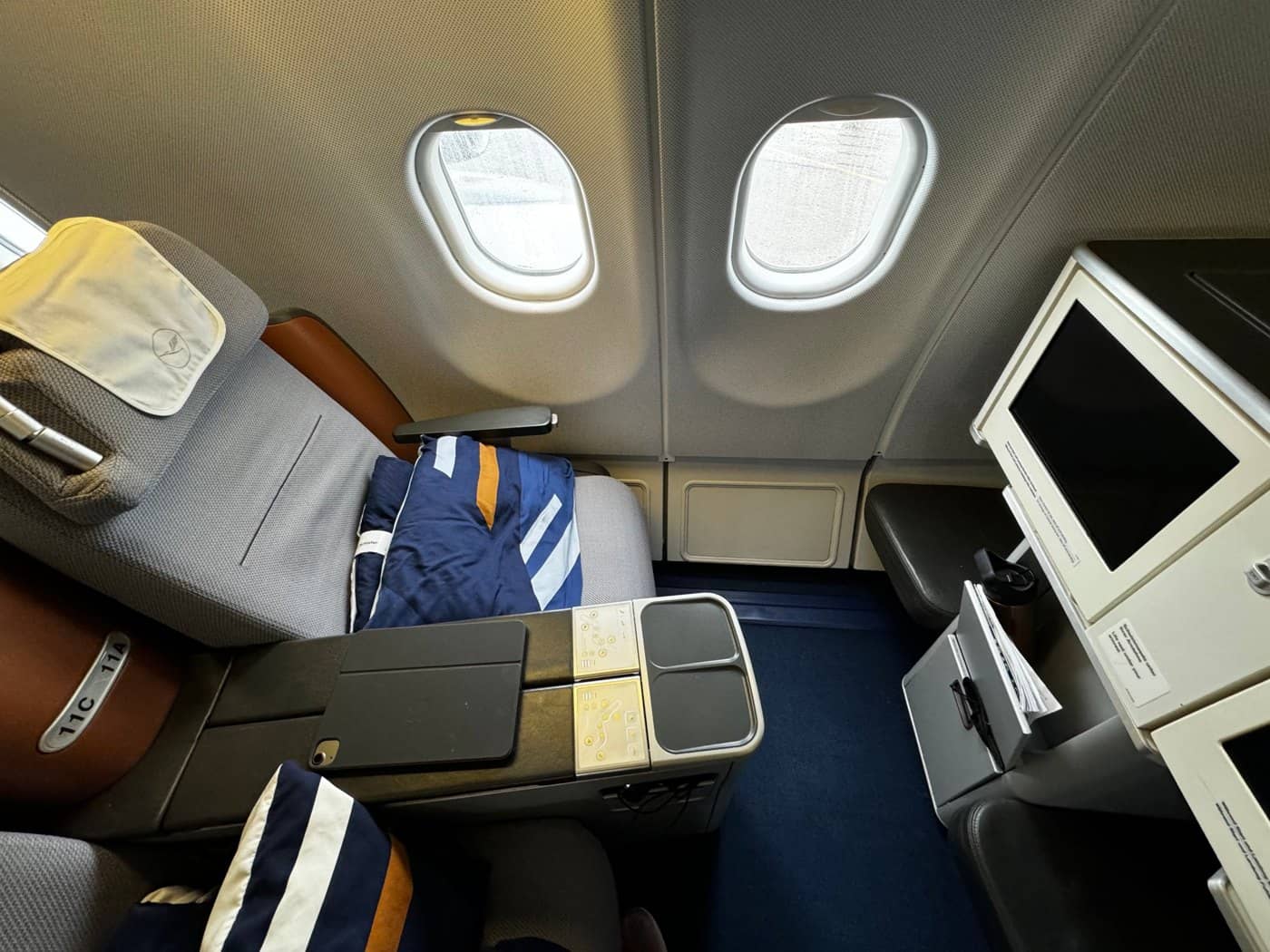
I am a window-seat person, and I still drink plenty. The trick is timing, not giving up the view. On a 10-hour flight, plan your trips around natural break points: right after the meal cart clears, when your row-mates get up anyway, and about 90 minutes before landing. If you would rather come and go whenever you like, book the aisle and trade the view for convenience.
Gear That Helps
My Hydro Flask 24 oz Flex Straw Bottle fits a seat-back pocket and lets me sip on my own schedule instead of waiting for the crew. Collapsible bottles save space in your personal item once you have finished the water, and a few low-sugar electrolyte packets weigh almost nothing.
What to Avoid: Alcohol, Caffeine, and Other Diuretics
Alcohol and caffeine both have a diuretic effect, meaning they push water out of your body. On a long flight, that’s the last thing you want.
A glass of wine feels relaxing at 35,000 feet. It also dehydrates you faster than the dry cabin air alone. Caffeine does the same, and it can wreck your sleep schedule on an overnight flight.
What to limit:
- Alcohol, especially on flights over 6 hours
- Coffee and energy drinks after the first few hours
- Salty snacks that make you thirstier
Water, herbal tea, and electrolyte drinks are better choices. If you do have a drink, match it with a full glass of water.
When Hydration Is Not Enough: Seeking Help
Sometimes water alone won’t fix it. Know the signs that need more than a refill.
Seek help if you notice:
- Confusion, dizziness, or fainting
- Very dark urine or no urine for many hours
- Rapid heartbeat or trouble breathing
- Persistent vomiting or diarrhea
Tell a flight attendant right away. Cabin crew are trained for medical situations and can page a ground doctor.
If you have a health condition, a fluid restriction, or take medications that affect hydration, talk to your doctor before you fly. Hydration advice is general, not medical advice.
Long haul flights test your body in ways you can’t always see. Dry cabin air, poor sleep, and jet lag all pile up. Staying ahead of your fluid intake is one of the few things you fully control. Plan0gram was built for travelers who care about the details, from honest gear reviews to airport guides that actually help you move through a hub. Explore my work and find the guides, gear picks, and window-seat stories that make every flight better.