Last Updated: November 3, 2026
Why the Bumps Feel Worse Than They Are
Here’s the one fact that matters most: the shaking almost never matches the danger.
Your body is the problem, not the airplane. A sudden drop of a few centimeters registers in your inner ear as a fall.
Here’s the part most guides get wrong: the worst bumps usually hit the smoothest air.
The plane is fine. Your seat belt is the only thing that needs your attention.
Don’t read this right before you get on a plane. When I book a flight, I always check the plane model, and on long flights I pick the biggest plane I can. Big jets like the A380 ride through the bumps much more smoothly. I avoided prop planes for years, since they typically fly at lower altitudes and run into more weather.
I had one flight from BOS to SEA that was so bumpy some of the oxygen masks dropped. That will get your attention pretty quickly. It turned out to be an older airplane that needed some TLC. It wasn’t about the turbulence, it was about the upkeep. I’m sure all the safety checks were current, just not the cosmetic stuff.
It’s also worth noting that the Boeing 787 has a system that moves the control surfaces on its wings to offset gusts in turbulence, and it makes a huge difference. US-based airlines do everything possible to avoid bumps. It’s about keeping you comfortable, much like avoiding potholes when you drive. Delta even built its own iPad app so its pilots could share where they found rough air and where they found smooth air.
What Causes Turbulence, Explained Simply
Turbulence is irregular air movement that pushes against the airplane, and the aircraft responds by rocking, rising, or dropping. The air is a moving fluid, not a solid road. When currents collide, swirl, or shear past each other, the airplane rides through them.
Think of a boat on choppy water. The hull is built for it. The ride is uncomfortable, not dangerous.
Thermal, Mechanical, and Clear-Air Turbulence
Three types cover most of what you will feel:
- Thermal turbulence: Warm air rises in columns, like bubbles in a pot. Common over land on hot afternoons.
- Mechanical turbulence: Buildings, hills, and mountains break up the airflow. You feel it most on approach and departure. Jet wash falls into this category. Air traffic control keeps planes a specific distance apart, and the bigger the plane, the farther back the next one needs to be. Just like boats.
- Clear-air turbulence: Fast-moving air currents at cruise altitude shear against slower air. No visual warning at all.
Thunderstorms, Jet Streams, and Mountain Waves
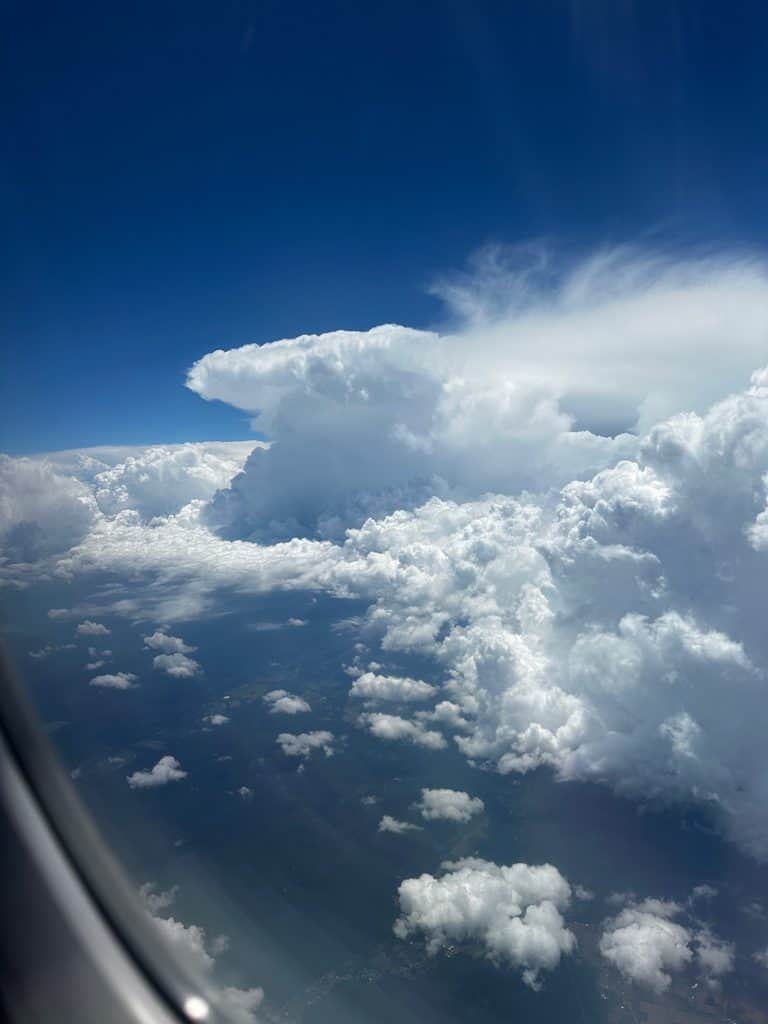
Thunderstorms produce the most violent updrafts and downdrafts, which is why pilots route around them. The jet stream creates fast ribbons of wind where bumps live. Mountain waves form downwind of ridges, sending ripples high into the sky.
Pilots see these on weather radar and flight planning tools. They file for smoother altitudes when they can.
Is Turbulence Dangerous? What the Numbers Say
No. Turbulence is uncomfortable, but it is not a threat to the airplane. Modern jets are stress-tested far beyond anything you will feel in the cabin, and the wings flex on purpose.
The real risk is standing up without your seat belt. Per FAA passenger safety guidance, the seat-belt sign exists to prevent injuries from unexpected bumps, not because the aircraft is at risk.
Flight crews and air traffic control coordinate constantly. Pilots report rough rides, ATC passes the word, and following aircraft request different altitudes. The system works because everyone shares the same information.
How to Deal With Turbulence Anxiety in the Moment
It comes down to one rule: give your body something to do. Anxiety feeds on stillness and spiraling thoughts. Action interrupts the loop.
Start with the seat belt. Pull it tight across your hips, low and snug. That single move tells your brain you are secured, and it is the only safety step that matters. This really works. Don’t be afraid to tighten it more than once, and just loosen it back to a comfortable position once things smooth out.
A Before, During, and After Plan
A simple plan beats willpower every time. Build it around three phases:
- Before the flight: Pick a seat over the wing, where the ride is generally smoother. Pack a calm kit. Download a breathing app. Check the forecast the night before so a bumpy map does not ambush you at the gate.
- During the bumps: Buckle up, plant both feet flat, and name five things you can see. If the seat-belt sign is on, stay put, do not sprint for the lavatory. If you are already in the aisle, grip the seat backs on your way back and sit down at the first open row.
- After the flight: Note what worked. Next time, you will trust the plan more than the fear.
Breathing and Grounding Techniques That Work
Try a 4-6 breath: inhale for four counts, exhale for six. The long exhale slows your heart rate. Then ground yourself with your senses. Say the color of the seat, the sound of the engines, the feel of the armrest.
Many nervous flyers find the fear peaks early in a bump and fades once the body confirms nothing bad followed. Knowing that curve helps you ride it out instead of fighting it.
Situation-Specific Advice
Generic tips fall apart when you are traveling with a child, stuck in a window seat, or managing motion sensitivity. Here is how to adapt:
- Traveling with children: Put the child in the middle seat next to you, not the window, so you can brace them with your arm. Give them a job, counting the bumps, holding the snack bag, so the sensation becomes a game instead of a threat. Keep a small toy or sticker book in the calm kit.
- Sitting by a window: The view is your ally. Watch the wing flex and hold. If the sight of movement makes it worse, close the shade and focus on the seat in front of you. Either choice is fine; pick the one that steadies you.
- Using the restroom: Go before the seat-belt sign comes on, especially on approach into busy hubs. If the sign dings while you are in line, return to your seat, do not wait it out in the aisle.
- Motion sensitivity: Book a seat over the wing, keep ginger chews or motion-sickness bands in your pocket, and avoid heavy meals before a flight with a rough forecast. A soft neck pillow keeps your head from jerking during chop.
For a deeper toolkit, our guide on 5 ways to manage flight anxiety walks through safety facts, breathing, grounding, the crew, and a calm kit.
Watch out: do not read a seat-belt sign as a verdict on the flight. It comes on for light chop all the time, and the crew is following procedure, not signaling danger.
What a Turbulence Forecast Can and Cannot Tell You
A turbulence forecast predicts where rough air is likely, not what your specific flight will feel like. It maps probability, not certainty. Understanding that distinction is the difference between using a forecast to prepare and using it to scare yourself.
What the Severity Terms Actually Mean
Forecasts and pilot reports use a standard scale, and the words are narrower than they sound:
- Light: Slight, erratic changes in altitude and attitude. Passengers may feel a strain against the seat belt. Food service continues.
- Moderate: Larger changes in altitude and attitude, but the airplane remains in positive control at all times. Passengers feel definite strain against the belt. Crews typically suspend service.
- Severe: Large, abrupt changes in altitude and attitude; the airplane may be momentarily out of control. This is rare, and pilots route around it when forecasts flag it.
Most of what you feel in the cabin is light to moderate. Severe is the category pilots work hardest to avoid, which is why your flight plan may look longer than the straight line on a map.
How Forecasts Are Built, and Where They Get Fuzzy
Forecasters combine numerical weather models, wind shear data, and pilot reports (PIREPs) to flag likely rough air.
Sites and apps that show turbulence maps are useful for planning. They cannot tell you the exact altitude, route, or moment your flight will hit a bump. Weather shifts, and pilots adjust in real time. A forecast is a heads-up, not a verdict.
How to Use a Forecast Without Overreading It
Use forecasts to prepare, not to predict. If the map looks rough, pack your calm kit and pick a smoother seat. Then let the crew do their job. A few practical habits:
- Check the forecast the night before, not at the gate, so you have time to adjust your seat or pack gear.
- Treat a rough map as a reason to bring ginger chews and noise-canceling headphones, not a reason to cancel.
- Remember that pilots see the same data plus real-time radar and PIREPs from aircraft ahead of you. They are making decisions with more information than any app shows you.
Watch out: do not treat a green map as a guarantee of smooth air or a red map as a guarantee of a rough ride. Forecast uncertainty cuts both ways, and the cabin experience often lands somewhere in between.
Normal Bumps vs. a Real Safety Instruction
Normal turbulence looks like this: the airplane shakes, the seat-belt sign dings on, and the crew keeps moving or takes their seats. That is routine.
A real safety instruction sounds different. The crew gives a clear, calm command: “Everyone remain seated with seat belts fastened.” They stow carts and sit down.
Packing Gear That Helps You Ride Out the Bumps
A small carry-on kit changes the whole experience. You want items that calm your body and keep you comfortable when the seat-belt sign stays on.
As an Amazon Associate, Plan0gram earns from qualifying purchases. Some links in this section are affiliate links, which means I may earn a small commission at no extra cost to you.
Our travel gear picks cover practical carry-on essentials for the flight. For turbulence specifically, these earn their space:
- Noise-canceling headphones: Cut the engine drone that amplifies anxiety. See noise-canceling headphones on Amazon
- A contoured eye mask: Reduces visual stimuli during long bumpy stretches. See contoured eye masks on Amazon
- Motion-sickness bands or ginger chews: Practical for sensitive stomachs. Sea-Band wristbands or Gin Gins ginger chews
- A refillable water bottle: Hydration helps you feel steadier. I carry a Hydro Flask 24 oz with the flex straw.
- A travel neck pillow: Keeps your head from jerking during chop. See travel neck pillows on Amazon
All of these pack small and fit under the seat in front of you.
Situation | What to Do | Why It Helps |
|---|---|---|
Light chop, sign on | Buckle tight, stay seated | Prevents surprise injuries |
Moderate bumps | 4-6 breathing, feet flat | Calms the fear response |
Crew gives instruction | Follow it exactly, stow items | Keeps you and others safe |
Rough forecast ahead | Pick a wing seat, pack calm kit | Smoother ride, less anxiety |
Book Your Next Window Seat With Confidence
Seat choice is your best defense against a rough ride. The smoothest spot on most jets is generally over the wings. The tail tends to swing more, so the back rows can feel bumpier if bumps bother you.
Our guide on how to choose the best seat on any flight breaks down aircraft layout, sun direction, and seat maps. When you are ready to lock it in, learn how to request a window seat at check-in so you land the seat you actually want.
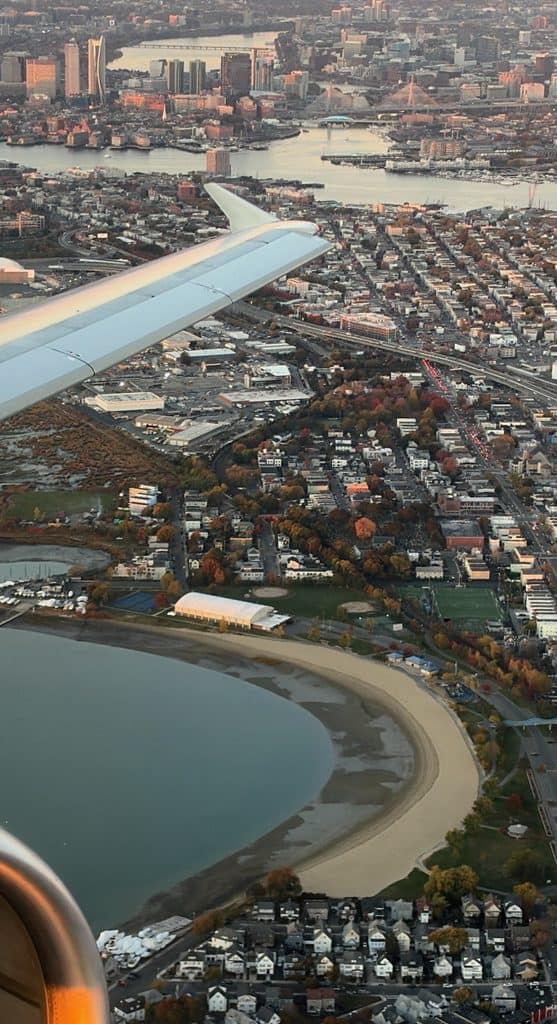
A window seat gives you something better than the aisle: a view that steadies you. Watching the wing flex and hold can be a reassuring sight.
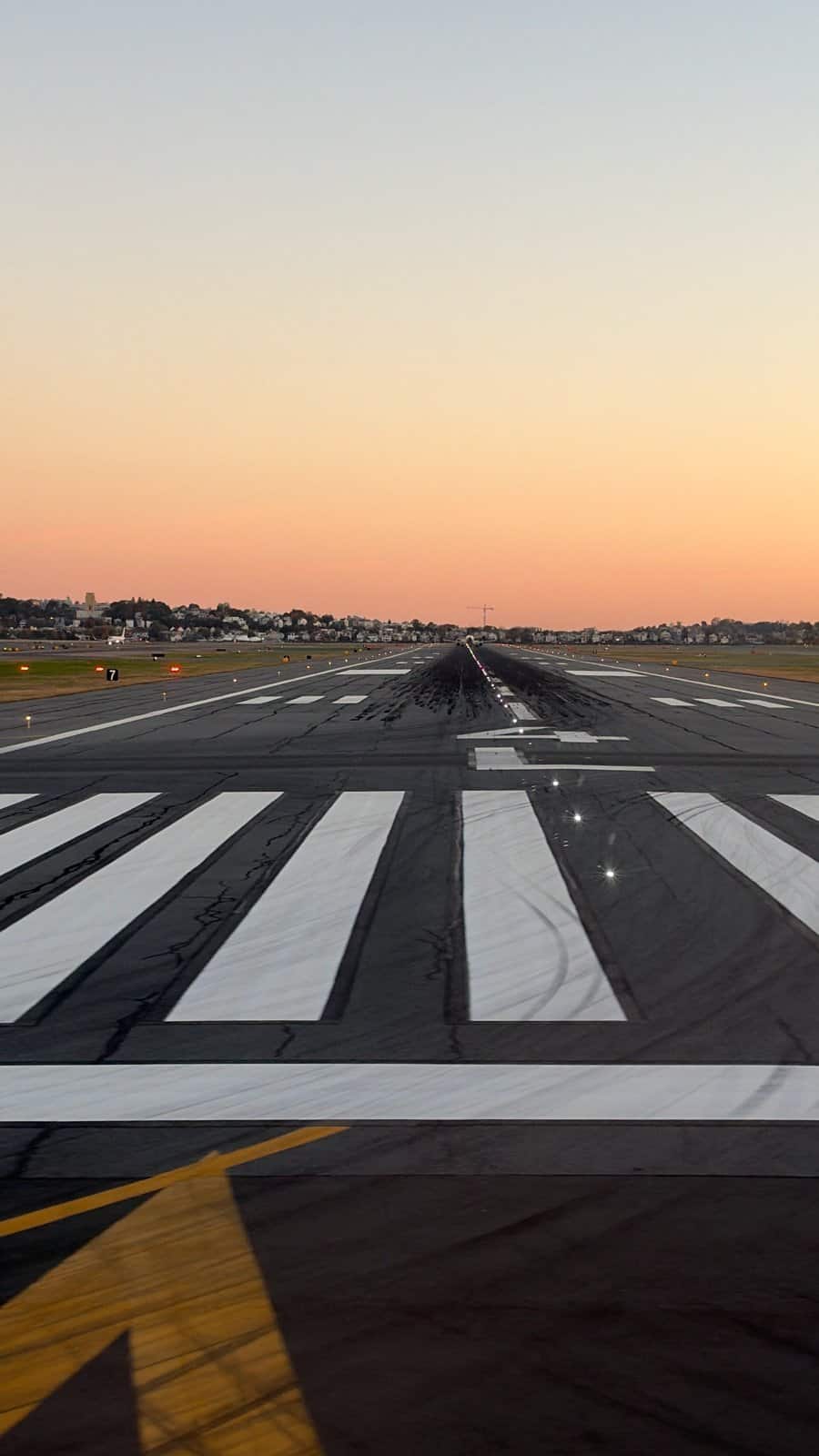
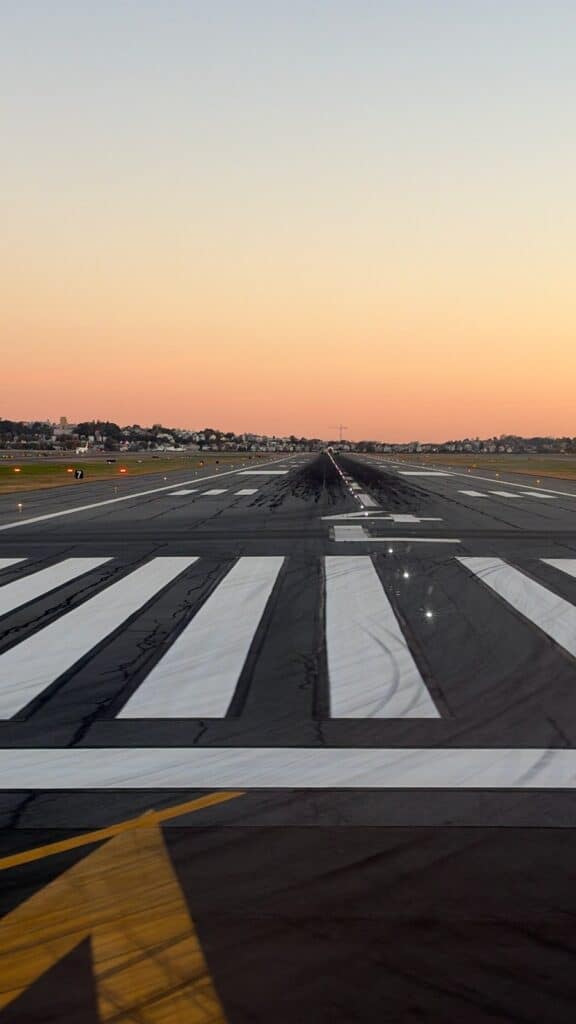
Lined up at Boston Logan at sunrise. A calm runway and a window seat make a great start for nervous flyers.
Turbulence is a fact of flying, but fear does not have to be. At Plan0gram, we built our guides around 34 years of flying and 3 million miles in the air, with honest gear reviews and seat advice that helps you fly smarter. Explore our airport guides, gear picks, and window-seat tips, then get started with Plan0gram and turn your next bumpy flight into a calm one.