Last Updated: November 2, 2026
The Best Seats on a Plane in Economy for Long-Haul Flights
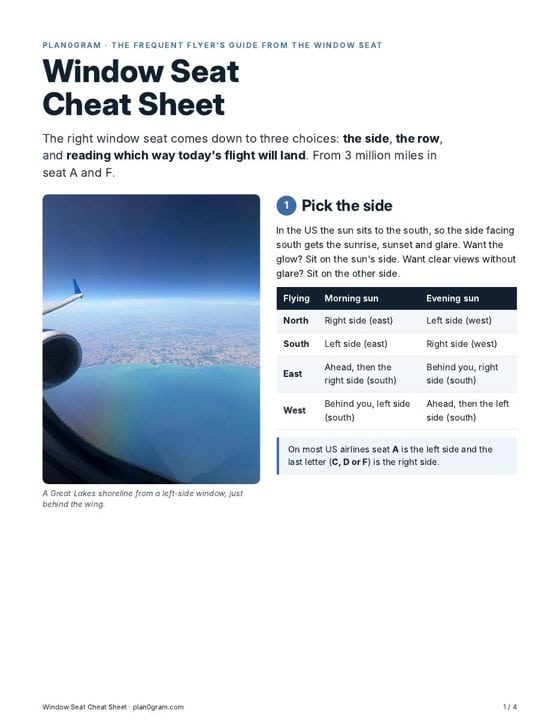
Short answer: a window seat in the forward half of economy, on the side away from the morning sun, booked the day the schedule opens.
At Plan0gram, we’ve spent 34 years flying and figuring this out the hard way, one middle seat at a time.
First, I look at final destination – is there anything direct or are there better plane options with a connection. Part of that decsion is based on which carrier I am trying to get status on at the time. Once I know my options are, I consider timing and then price. For example, I could have flown direct from EWR on a a United 767 or if I take a connection, I can fly on the brand new Swiss Air A-350. Simple choice if the price is similar. I know the newest plane will have the best entertainment, best HVAC, least worn seats, quieter, and a better overall experience. Now where do you want to sit? Can you pay to get assigned seat. I do it everytime on international flights. No amount of money is justifies a middle seat in coach for 6 hours or more.
Before you open a single seat map, rank your priorities. (If views are your top priority, my guide on how to choose the best window seat goes deeper.)
Score each priority from one to three, then let the highest score decide:
- Sleep above all: window seat, mid-cabin, away from the galley and lavatory.
- Legroom above all: exit row or bulkhead, accepting the trade-offs below.
- Movement above all: aisle seat, ideally near the rear so you’re close to the lavatory.
- Quiet above all: forward cabin, ahead of the engines, away from the galley.
- Views above all: window seat ahead of the wing, on the side away from the sun.
Aircraft-Specific Picks for International Flights
The best seat depends on the aircraft, not the airline. The same carrier often flies different widebody types on the same route on different days.
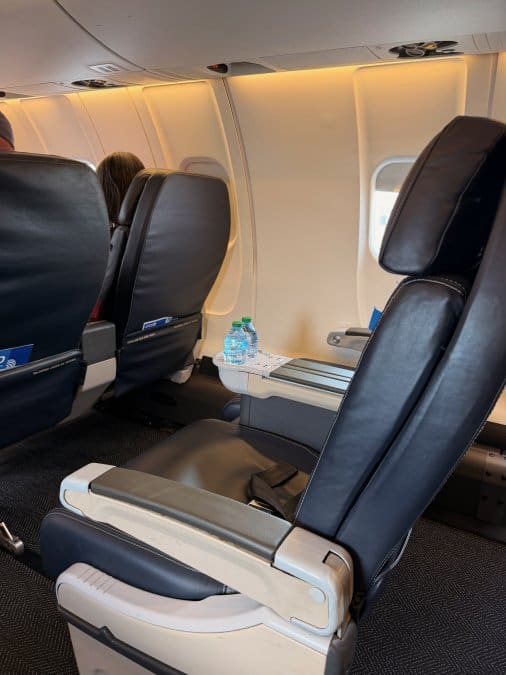
Here is how the common widebody families sort out:
- Boeing 787 (often 3-3-3): The forward economy rows on the window side give you a wall, a view, and a short walk to the forward lavatory.
- Boeing 777 (often 3-4-3 on newer configurations, 3-3-3 on older ones): On a 3-4-3, the middle block’s aisle seats get bumped constantly by carts and passengers, so the outer aisle seats are the better bet. On a 3-3-3, the window seats in the first few economy rows are the strongest sleep pick.
- Airbus A350 (often 3-3-3): The forward cabin ahead of the engines is the quietest economy zone. Window seats in the first few rows of economy get a wall and a shorter walk to the forward lavatory.
- Airbus A330 (often 2-4-2): The two-seat outer blocks are the sleeper pick, a window and an aisle in the same pair, with no middle seat to climb over. The center four-seat block is the one to avoid if you can.
- Boeing 767 (often 2-3-2): The two-seat outer blocks are the best economy seats on the airplane for couples and solo sleepers alike. The center three-seat block has the only middle seats in the cabin.
Ask one question before you book: which aircraft type is scheduled? Then check the seat map against that specific layout, not a generic one. Airlines swap aircraft, so re-check the map after any schedule change notification.
Reading a Seat Map Before You Commit
A seat map tells you more than availability if you know what to look for. Scan for wing position, lavatories, the galley, and any row where the seat count changes.
- Wing position: Window seats directly over the wing have the view partly blocked. See pro tips for avoiding bad seat views before you lock in a window. If the view is your reason for booking, sit ahead of the wing leading edge or behind the trailing edge.
- Lavatory and galley proximity: Seats beside a lavatory inherit queue traffic, light, and door noise; rows beside a galley inherit cart clatter and crew conversation. Both are worst on red-eyes.
- Cabin taper rows: Rows where the cabin narrows are usually quieter but slower to exit. Check the seat map for rows with fewer seats near the back.
- Missing rows: A gap in the row numbering usually means a closet, crew rest, or bassinet mount, worth a second look for legroom, worth avoiding for noise.
- Exit rows: Marked on the map, but the map rarely tells you whether the seat reclines. Check a seat-review site or the airline’s notes before you commit.
Accessibility and Medical Considerations
Seat selection for travelers with mobility needs, service animals, or medical equipment follows different rules. Request assistance through the airline’s accessibility desk at booking, not at the gate, and confirm the seat assignment in writing. If you use a CPAP or other portable medical device, check the airline’s carry-on and in-seat power policy for your specific aircraft, since outlet availability varies by row and type.
Sleep, Legroom, and Personal Space: Matching the Seat to the Flight
Sleep on a long-haul flight is mostly about three things: recline, a surface to lean against, and distance from noise. A window seat in the mid-cabin delivers all three better than an aisle seat near the galley.
Legroom is a separate calculation. Seat pitch varies by airline and row, and the gap between a standard and extra-legroom row is real but not unlimited.
For long flights, pair your seat strategy with a hydration plan.
What I Pack for a Long-Haul Window Seat
As an Amazon Associate, Plan0gram earns from qualifying purchases. Links below are affiliate links, which means I may earn a small commission at no extra cost to you.
- A travel neck pillow that wraps the side of your neck, so you can lean into the wall. See travel pillows on Amazon
- A contoured eye mask for when the window across the aisle is open. See eye masks on Amazon
- Noise-canceling headphones to cut engine and galley noise. See noise-canceling headphones on Amazon
- A refillable bottle so you are not waiting on the cart. I carry a Hydro Flask 24 oz with the flex straw.
Exit Rows, Bulkheads, and the Seats Worth Avoiding
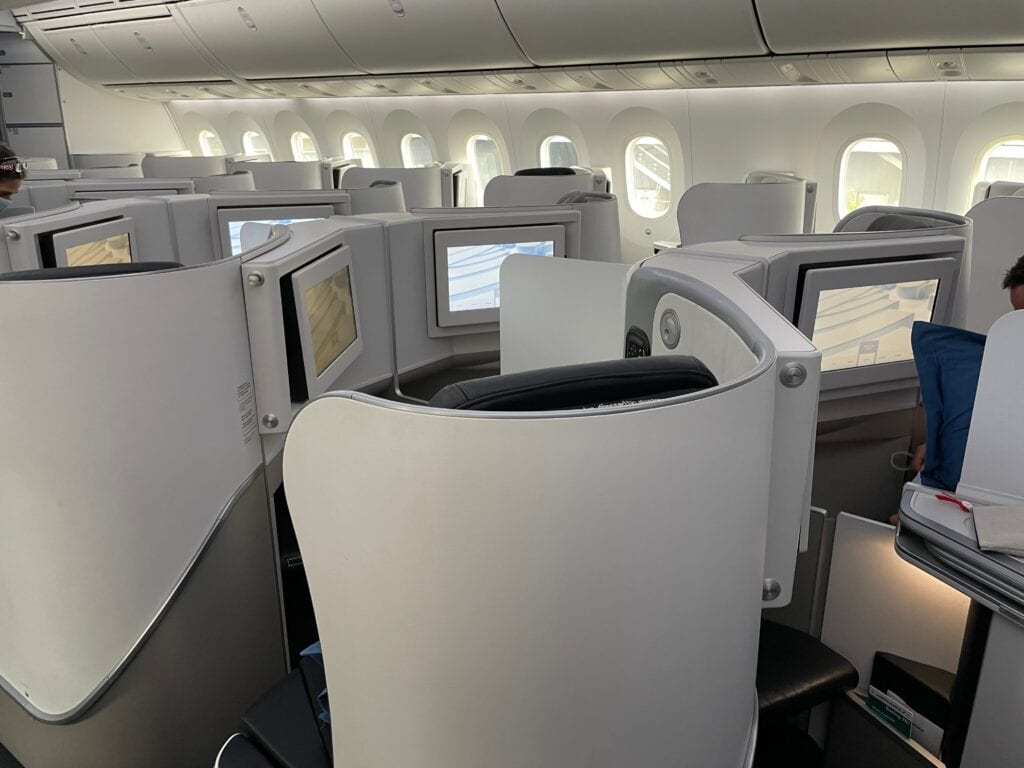
Exit rows trade recline and storage for legroom. Before you pay, read an honest review of extra legroom and its comfort trade-offs.
Bulkhead seats offer legroom and a clear view forward, but come with tray tables in the armrest, no under-seat storage, and sometimes a bassinet mount nearby.
The seats worth avoiding, ranked by how much they cost you on a long haul:
- Last row before a lavatory: queue traffic, light, door noise, and sometimes a shared wall with the flush. Worst on red-eyes.
- Any row beside a galley: cart clatter, crew conversation, and the smell of reheated meals. The forward galley is usually busier than the rear one.
- Rows where the cabin narrows: quieter but slower to exit, and often the last to get service.
- Middle seats in a center block: no wall, no aisle, and both neighbors’ space claims. The only reason to take one is a full flight.
- Seats with a missing window: some rows have a blanked-out window or none at all. Check the seat map and a seat-review site before booking a window seat you can’t see out of.
- Seats directly over the wing: the view is partly blocked, and the upside is that it is the smoothest ride on the plane.
A fuller trade-off matrix, beyond legroom and sleep:
Factor | Window | Aisle | Exit Row | Bulkhead |
|---|---|---|---|---|
Recline | Standard | Standard | Often limited or none | Standard |
Under-seat storage | Yes | Yes | No (takeoff/landing) | No |
Lavatory proximity | Varies by row | Varies by row | Usually mid-cabin | Usually forward |
Foot traffic | Low | High | Low | Low |
Noise | Low at window | Higher | Varies | Varies |
Turbulence feel | Smoothest over the wing | Smoothest over the wing | Usually over the wing (smooth) | Bumpier than mid-cabin |
Watch out: booking an exit row for a red-eye without checking recline first. You can end up with legroom and no sleep, which is the worst of both.
Economy vs. Premium Economy: When the Upgrade Pays Off
Premium economy buys a wider seat, more recline, and often a quieter cabin position. Whether it pays off depends on flight duration and how much you value sleep.
On a long international flight, the upgrade can turn a restless night into a functional one; on a shorter transcontinental hop, the difference is smaller. The test is simple: if you’d pay for a hotel room to arrive rested, the upgrade is usually the better spend.
Seat Fees, Timing, and the Booking Workflow That Gets You the Seat You Want
Seat selection fees vary by airline, route, and fare class, so check the carrier’s policy at booking. The workflow matters more than the fee.
Here is the sequence we recommend:
- Book the flight, then immediately open the seat map for that aircraft type.
- Mark your priorities using the decision guide above.
- Select a seat at booking if the fare allows free selection.
- Set a reminder to check back as the departure date nears.
- Ask again at check-in if your first choice is gone.
Lock In Your Seat Strategy Before Your Next Booking
The seat you get is rarely an accident. It’s the result of knowing your priority, reading the aircraft layout, and acting before the good rows disappear.
That’s the challenge we built Plan0gram around. After 34 years and three million miles, we’ve turned seat strategy, airport navigation, and gear reviews into practical guides for travelers who care where they sit. Explore my work and fly smarter on your next long haul.
Want the short version? My free Window Seat Cheat Sheet covers which side, which row, and when to book.